
Work Hoodies for Teams: 7 Styles Worth Branding

Published
A custom work hoodie has a harder life than a merch hoodie. It gets worn most days, washed on a high temperature and still expected to look like a uniform a year later. These are the styles that hold up, and how to match them to the work your team actually does.
Hoodies have quietly replaced fleeces as the default layer for a lot of UK teams. They are comfortable, staff actually want to wear them, and they carry a logo well. The secret is choosing a style built for work rather than one built for personal use.
Key points
- Around 280 to 330gsm is the year round default for work hoodies, 350gsm and up suits people outdoors in winter, and 210 to 260gsm suits indoor teams.
- Embroidery is recommended for hoodies that get washed constantly, and screen printing suits an exact Pantone match or a large graphic.
- The left chest is the default logo position, and a mark across the upper back is the one people see from a distance.
- Embroidery, direct to garment and direct to film start at 8 units, screen printing at 20, and mixed sizes cost no extra.
- A standard turnaround of six to seven business days.
In this guide
- What Makes a Work Hoodie Different
- Seven Work Hoodie Styles Worth Branding
- Matching the Hoodie to the Job
- Choosing a Work Hoodie Weight
- Printing or Embroidery for Work Hoodies?
- Where the Logo Goes on a Work Hoodie
- Before You Order for the Whole Team
- Ordering Branded Work Hoodies
- How to Order Work Hoodies
- Work Hoodie FAQs
What Makes a Work Hoodie Different
A retail hoodie is designed to be worn a couple of times a week and washed gently in low heat. A work hoodie is pulled on every morning, leaned against vehicles and walls, and washed at 40 or 60 degrees more often than the label would suggest. That changes what matters. Fabric weight, seam construction and how well the hoodie can keep its colour all move ahead of fashion fit, and the decoration has to be chosen to survive the same treatment as the garment.
It also changes how you buy. A branded work hoodie is part of a uniform, which means you need the style to still be in stock months down the line when a new team member starts, the sizing to cover everyone on the team, and the colour to match whatever else people are wearing. Those three things rule out more ranges than any question of quality does.
Seven Work Hoodie Styles Worth Branding
These are the styles we recommend to our workwear clients most often, and what each one is genuinely good for.
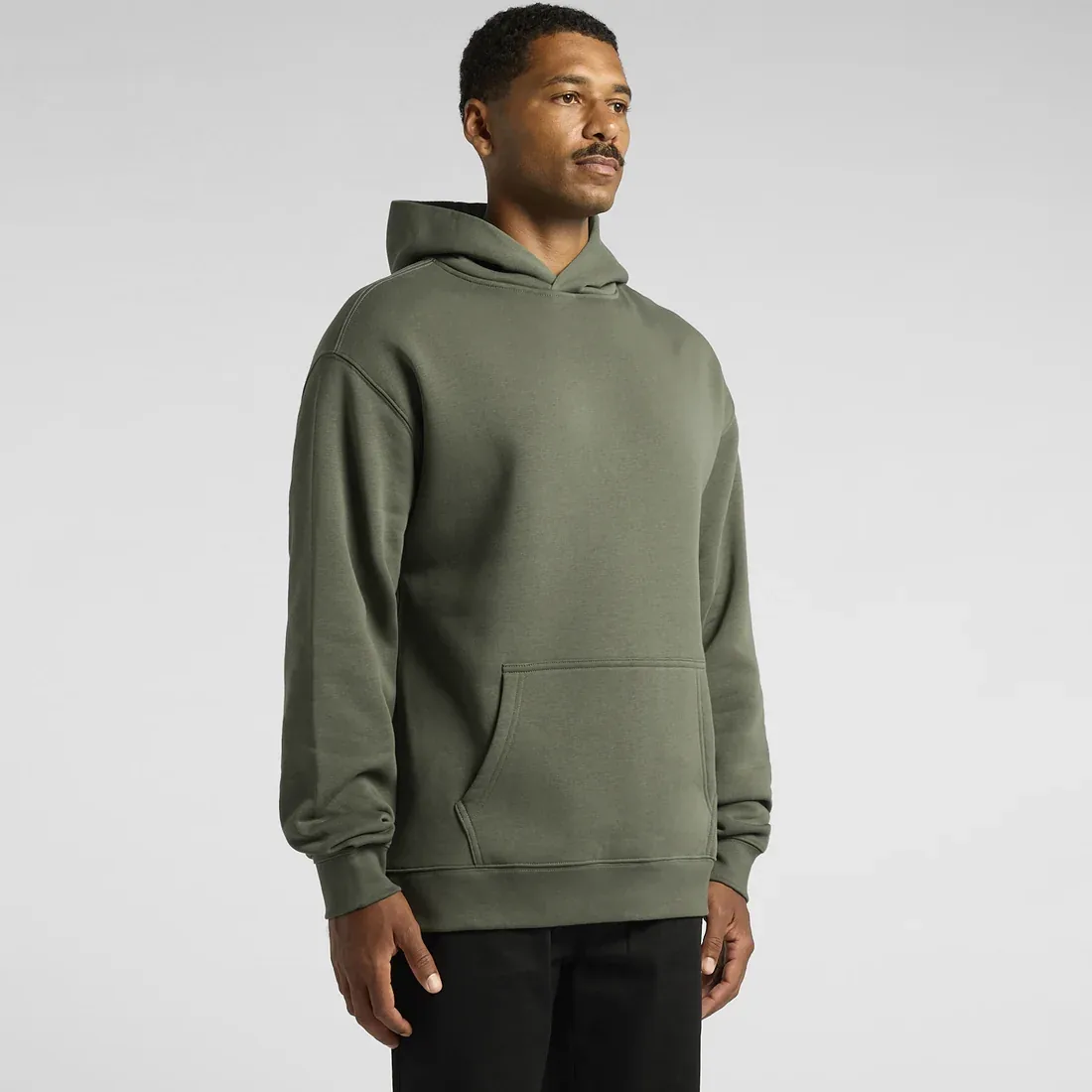
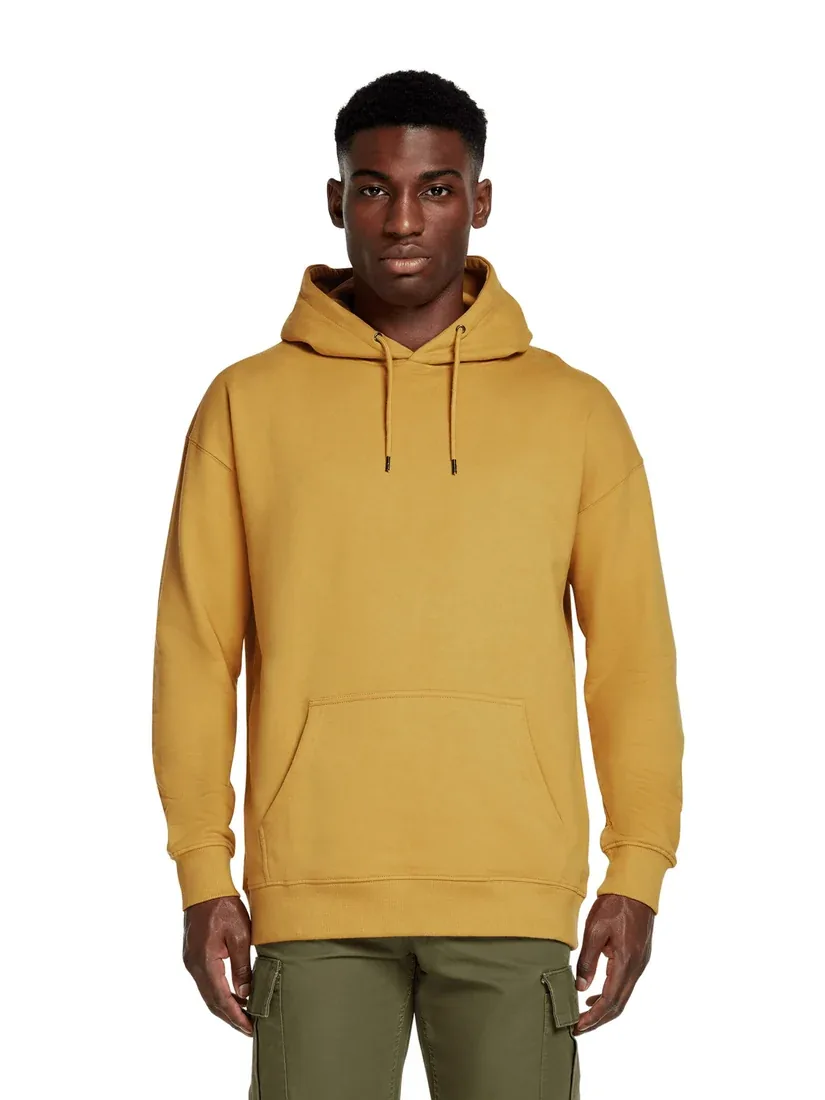
Mid-Weight Pullover
The standard team hoodie, with an uninterrupted front panel that gives you a clean chest print or a large centre graphic. If you are ordering one style for everyone, this is usually it. Warm enough for most of the British year without being too much indoors, and because almost every brand makes one you get the widest choice of colours and the best chance of the style staying available for repeat orders.
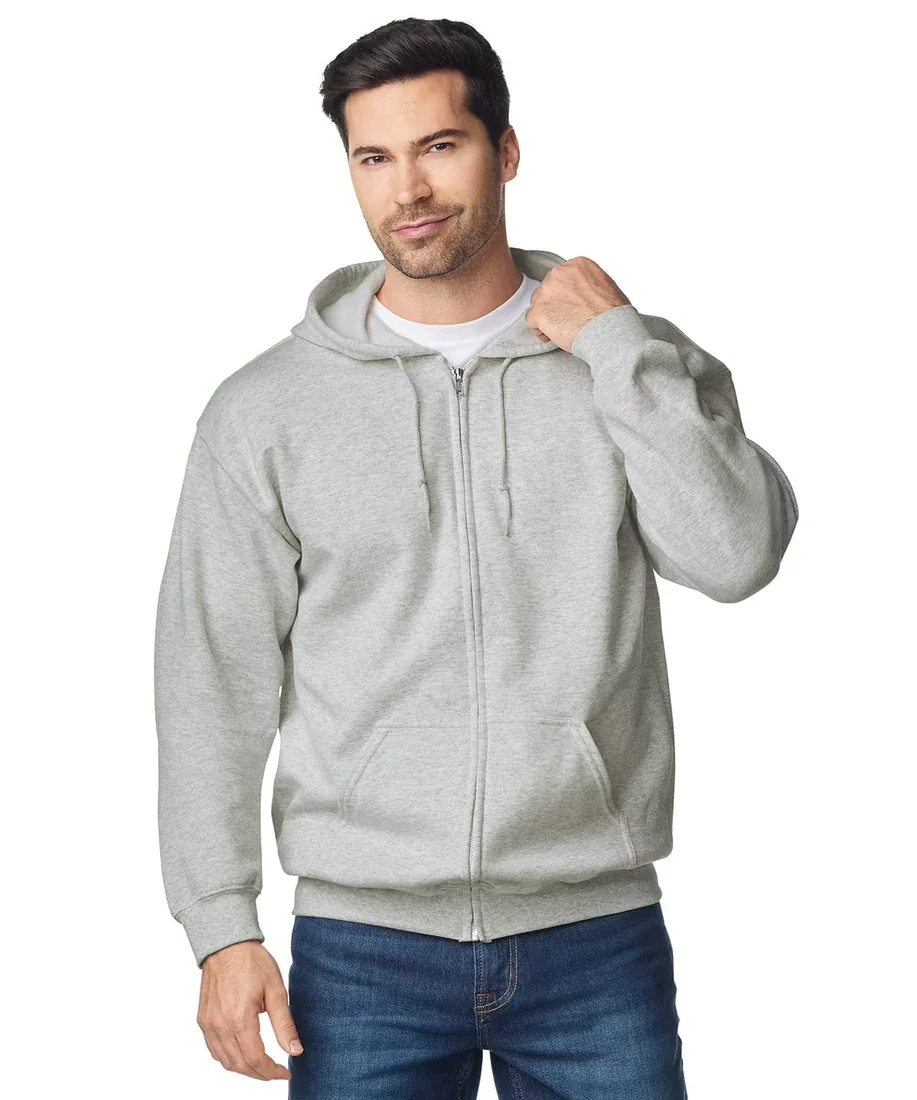
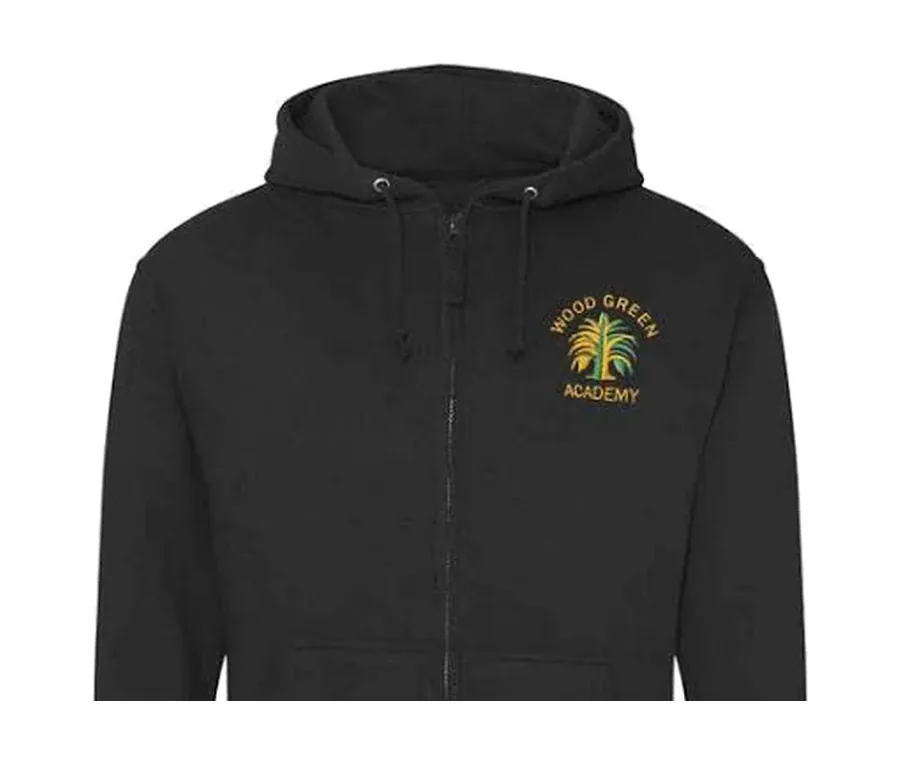
Full-Zip Hoodie
Easier to take on and off over other layers, which matters if people are in and out of vehicles or warm buildings all day. The zip splits the front, so plan on a left chest logo with anything larger going on the back. It is also the more forgiving choice for a mixed team, since it can be worn open when someone is working hard and closed when they are not, which usually means it stays on rather than ending up in the van.
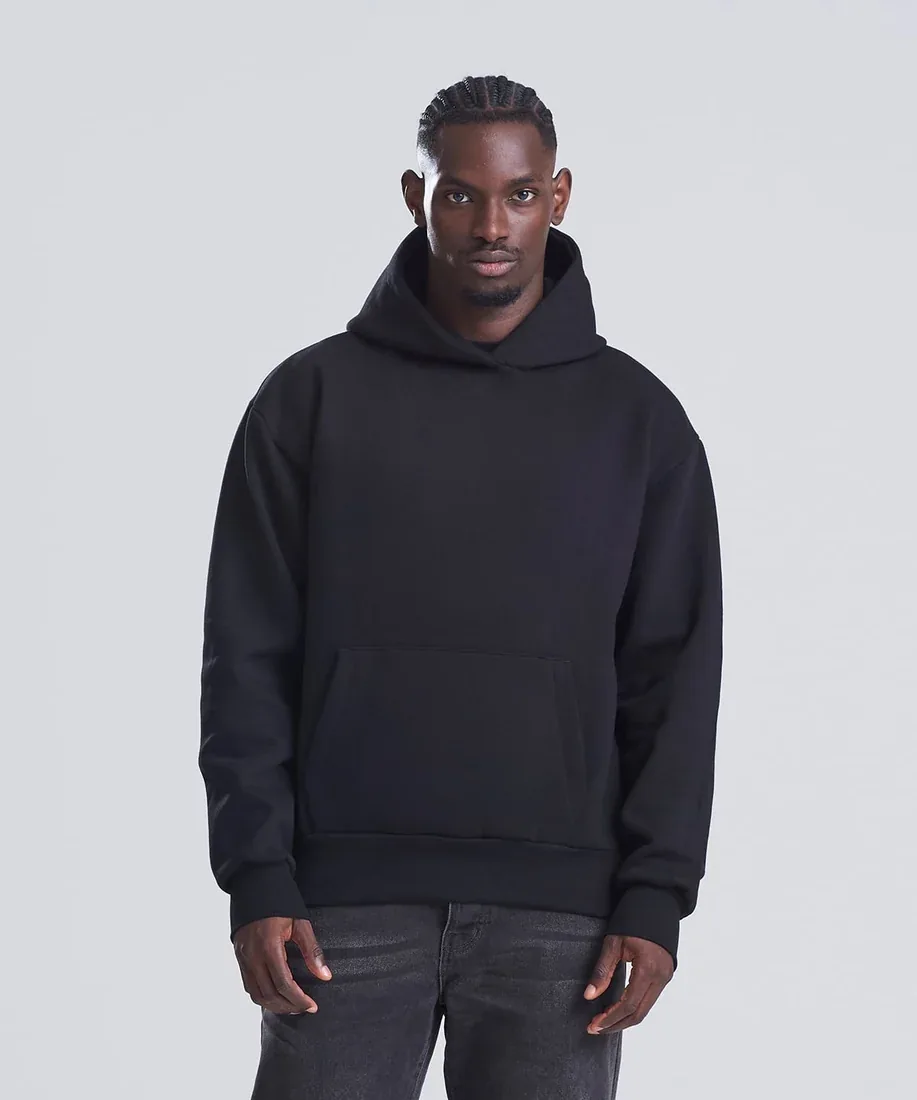
Heavyweight Hoodie
Warmer, more durable and noticeably more premium in the hand. Worth the extra if the hoodie is doing the job of a jacket for part of the year, or if you want staff to feel the quality. The denser fabric is also the best surface on this list for embroidery, because it holds the stitches flat without the puckering you get on a thin jersey, so a detailed logo comes out cleaner. Our Independent Trading Co range includes heavyweight hoodies built for exactly this job.
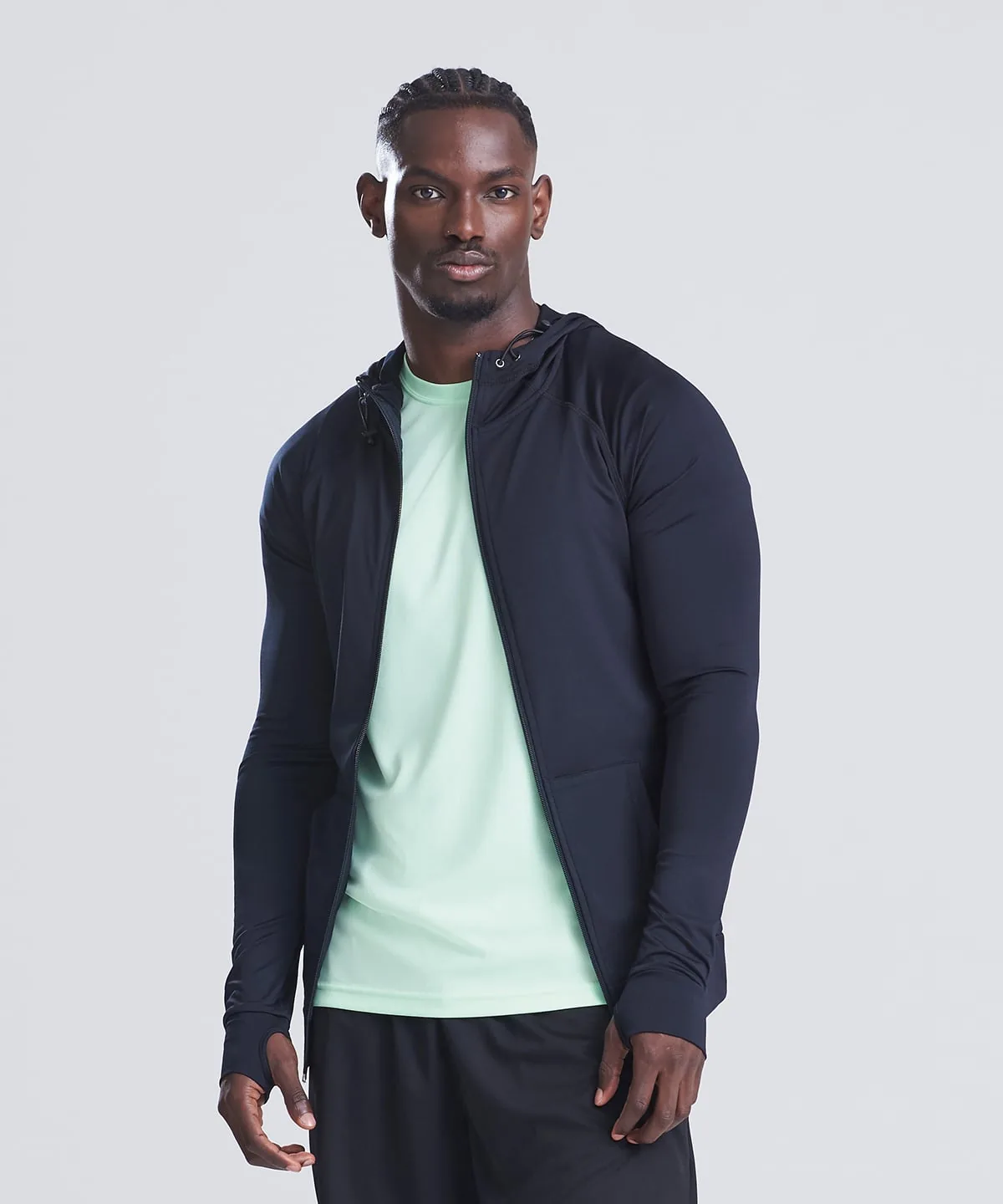
Zipped Lightweight Hoodie
For indoor teams, warmer months, and anyone who overheats in a full-weight hoodie. The JC057 wicks rather than holds sweat, stretches with the wearer, and throws in thumb holes and recycled GRS certified yarn. Keep the branding simple though: light fabric shows a heavy stitch count, so a clean chest logo beats a large back piece.
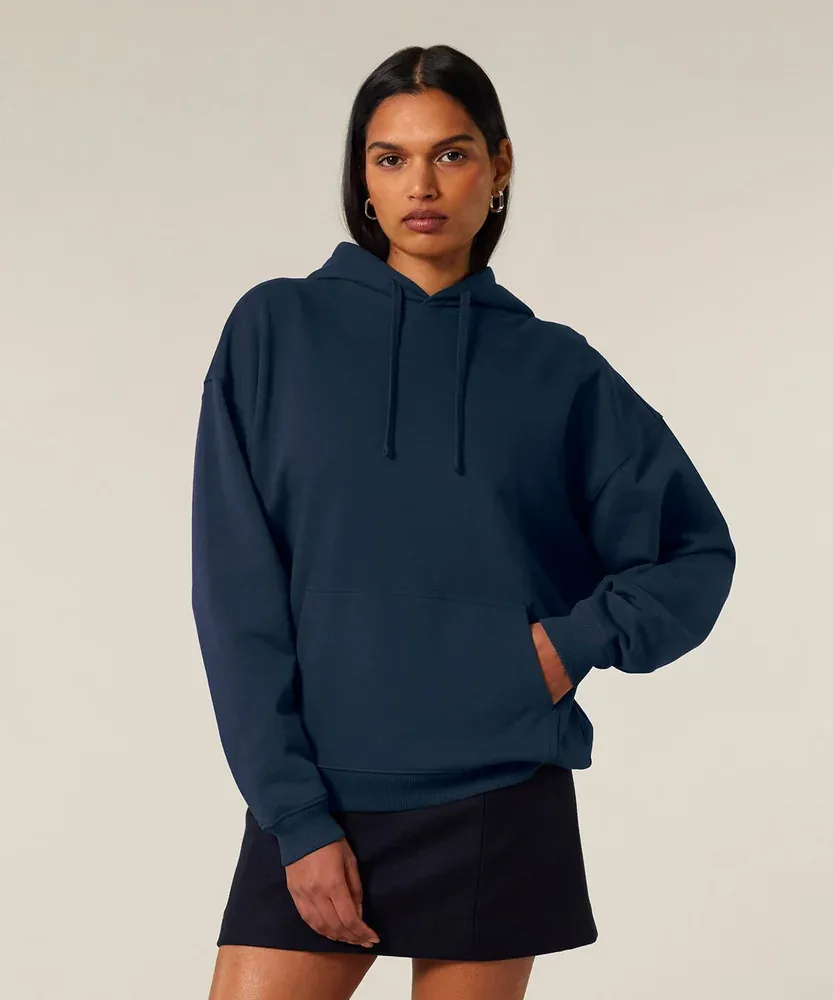
Contrast or Two-Tone Hoodie
Useful when you want to tell roles apart at a glance, or when your brand has two strong colours. Front of house in one colourway, warehouse in another, same logo on both. It is a cheap way to make a uniform feel designed rather than bought, and it saves a supervisor crossing a yard to work out who they are looking at.
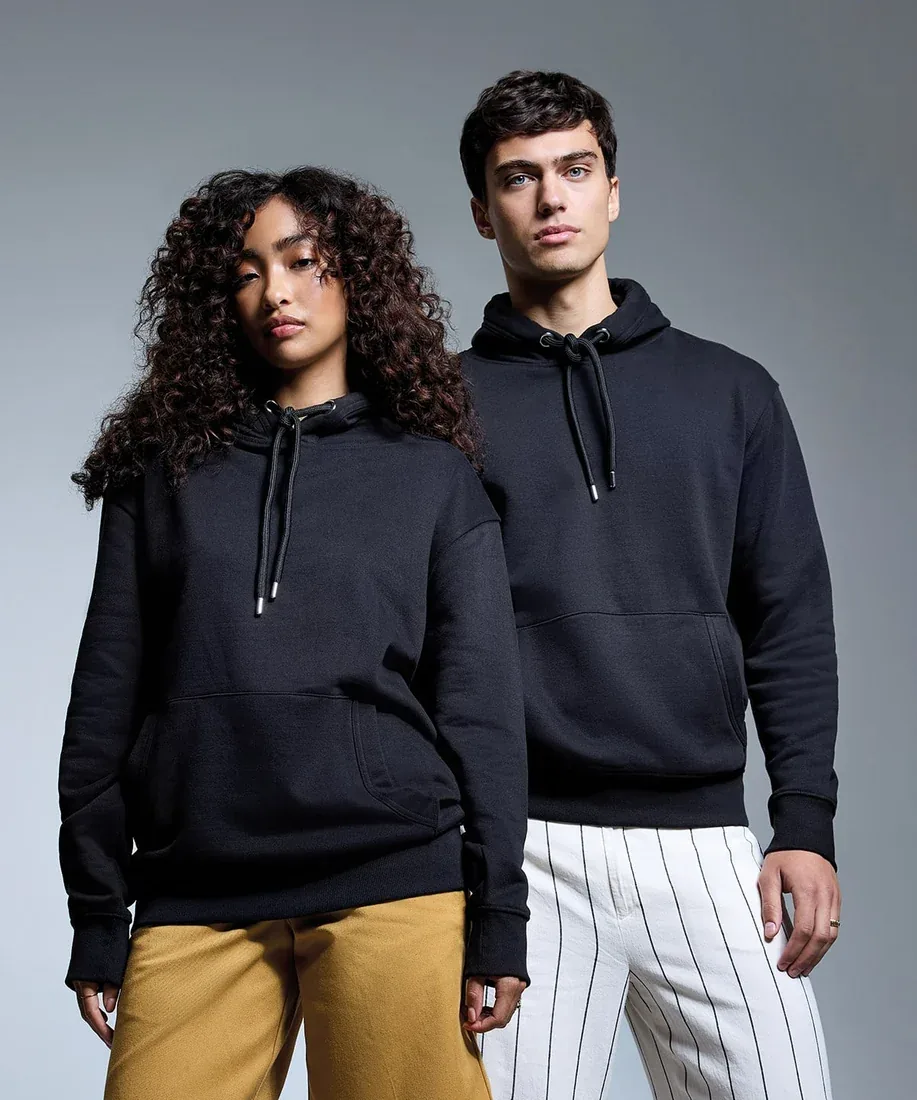
Organic Cotton Hoodie
If sustainability is part of how you present the business, a hoodie made from sustainable materials makes that visible on the shop floor rather than just on the website. The heavier organic ranges print and embroider as well as anything else. They cost more per unit, but for teams who deal with clients face to face it is often the detail that gets noticed and asked about.
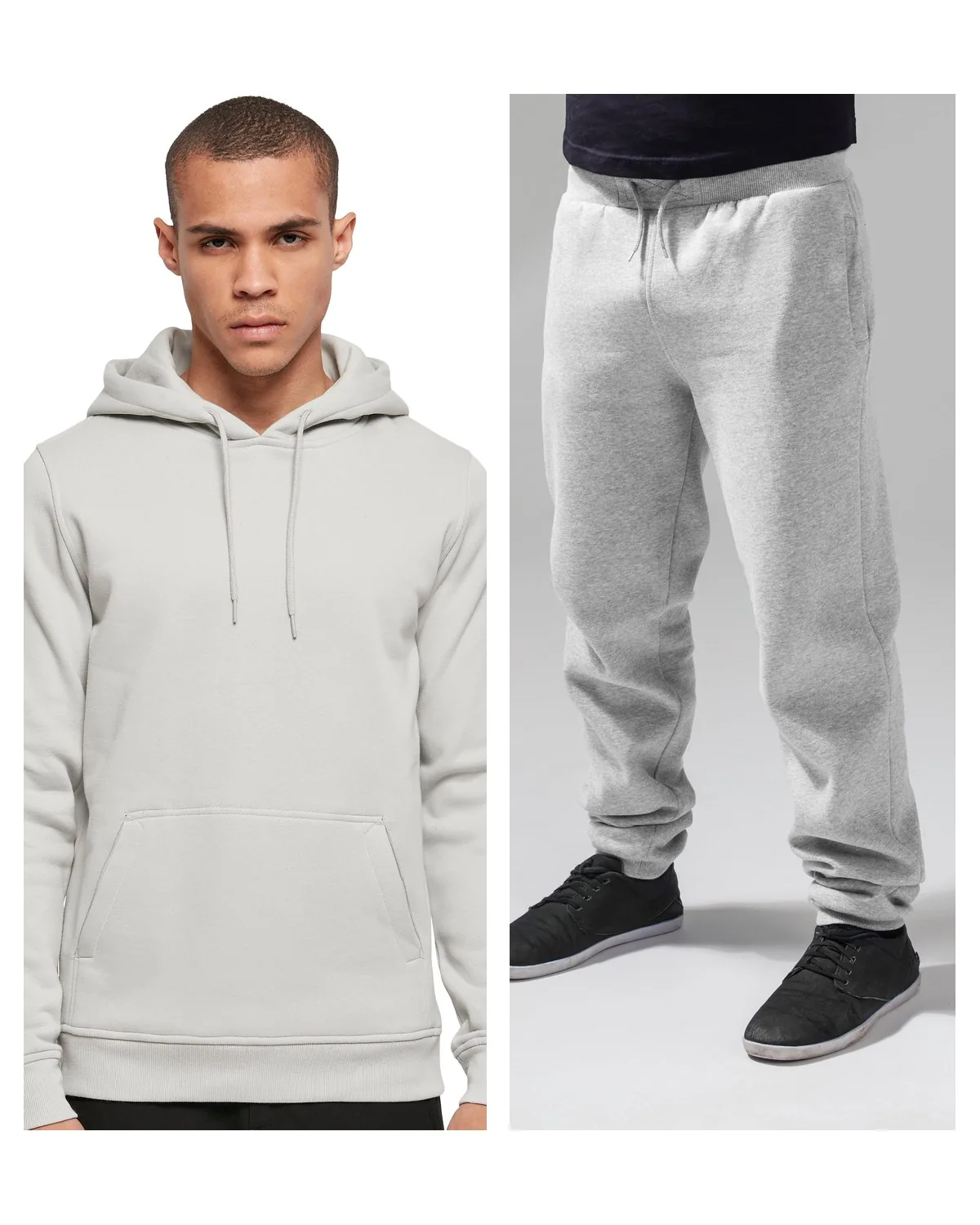
Hoodie and Joggers as a Set
Some ranges pair a hoodie with matching track pants, so you can put a team into a full branded set. The BY011 and BY014 are the same 300gsm cotton rich brushed fleece top and bottom, so they wear and wash alike and the greys stay matched. More common for events and promotional teams than site work, but it looks sharp when it lands. Keep the logo small and consistent across both pieces rather than repeating a large mark twice.
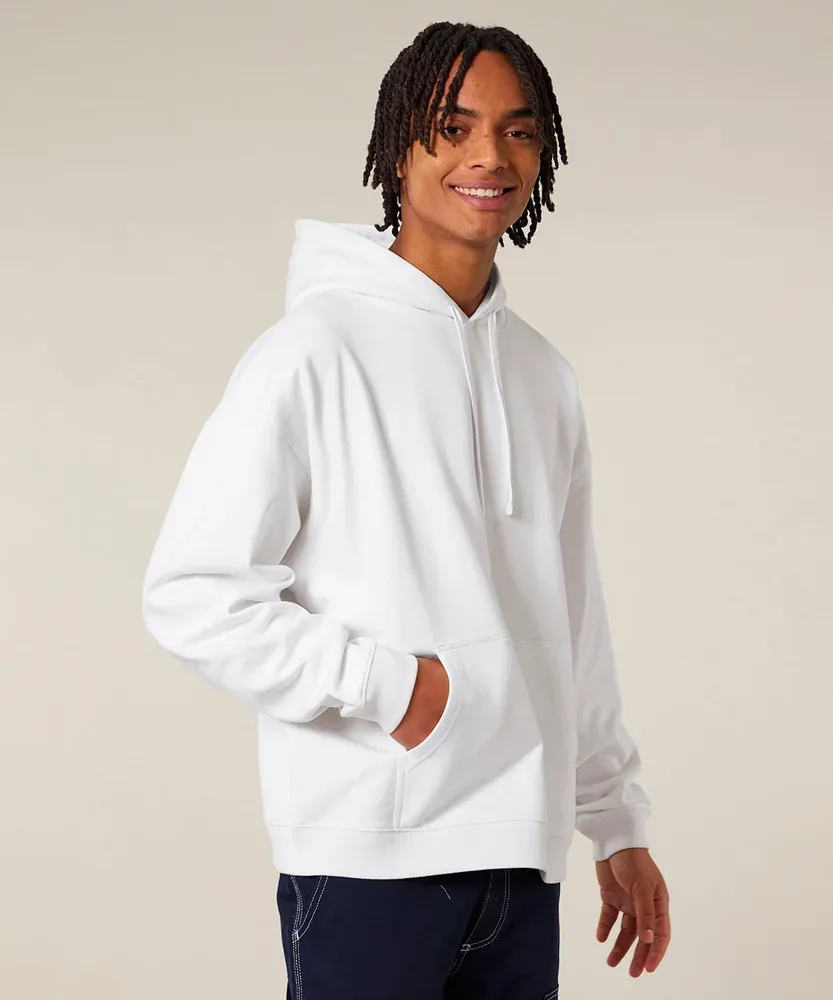
There is more than one route if you are looking for the organic option. The Anthem AM001 is made from sustainable materials and sits at an everyday weight, while the Earth Positive EP301 is a heavier organic pullover that comes in a wide colour range rather than the usual black and grey, which matters if your brand colour is the point of the uniform.
Matching the Hoodie to the Job
The right style depends less on the brand of hoodie than on what the person wearing it does all day. This is how we usually match them.
- Site, trades and groundworks: a heavyweight pullover in a dark colour that hides dirt, embroidered on the chest with a large print on the back. If a hi-vis vest is worn over the top, the chest and back are covered, so think about adding a sleeve logo that stays on show throughout the day.
- Warehouse and logistics: a mid-weight or lightweight zip, because people working hard indoors need to cool off without taking the uniform off.
- Drivers, engineers and field staff: a full zip, which is easy to take on and off to go in and out of the van and layers under a jacket.
- Hospitality back of house and retail: a mid-weight pullover in your brand colour, with a two-tone option if you want to differentiate roles.
- Studios, offices and customer facing teams: an organic or heavyweight hoodie in a considered colour, with a small embroidered chest logo rather than a large print.
- Events and promotional teams: a bright colour with a big back print, or a hoodie and joggers set when the team needs to look like one unit.
Choosing a Work Hoodie Weight
Weight is the key decision that affects comfort, cost and how the branding finishes, and it is the one most people skip. As a rough guide, 210 to 260gsm suits indoor work and warmer months, 280 to 330gsm is the year round default for most teams, and 350gsm and above is for people outdoors in winter or anyone who wants the hoodie to feel substantial.
A heavier hoodie is not always the better choice. For a warehouse team working hard indoors, a 400gsm hoodie will be too warm and will be taken off by mid-morning, and a uniform nobody wears is not doing its job. If your team splits between indoor and outdoor work, two weights in the same colour and the same logo usually works better than one compromise weight for everyone. If you are still weighing up brands, our guide to the best hoodies and hoodie brands for printing goes through the ranges themselves.
Printing or Embroidery for Work Hoodies?
For a hoodie that is getting washed constantly, embroidery is the more durable option and reads as more permanent on a uniform. Heavier hoodies take decoration better, because the fabric can withstand the needle pressure without puckering. They also age well, since stitches do not crack or fade the way a print eventually can.
Screen printing makes more sense when you want an exact Pantone match, a large graphic, or the lowest unit price across a big order. Most teams end up with both: an embroidered logo on the chest for the uniform look, and a printed logo on the back where the size would make embroidery slow and expensive. For a back print that really stands out, a raised puff print is worth asking about.
Where the Logo Goes on a Work Hoodie
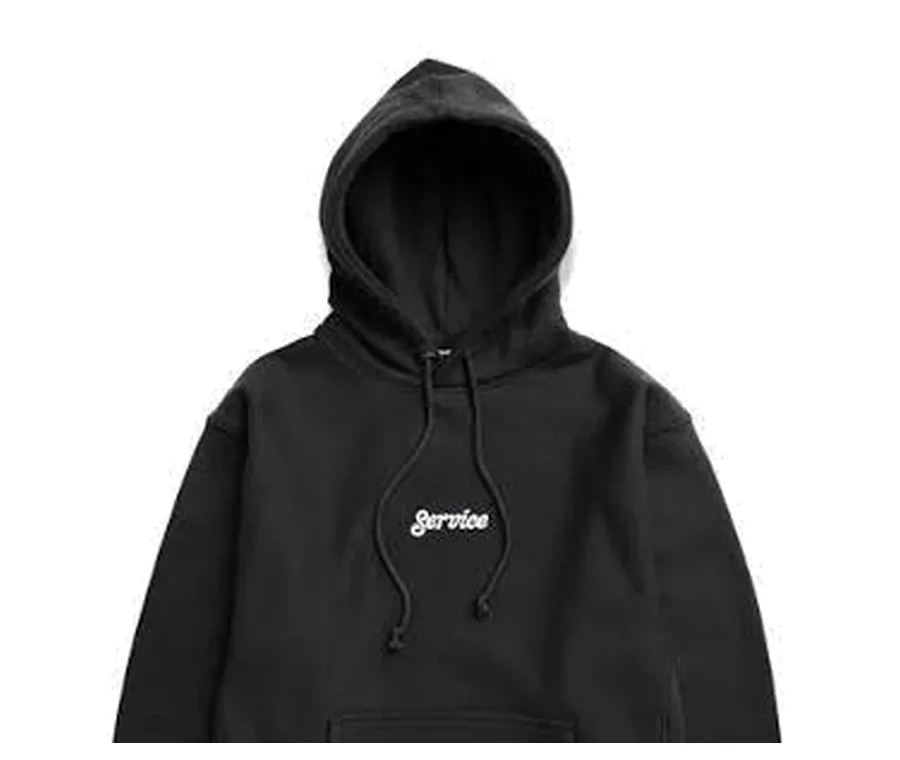
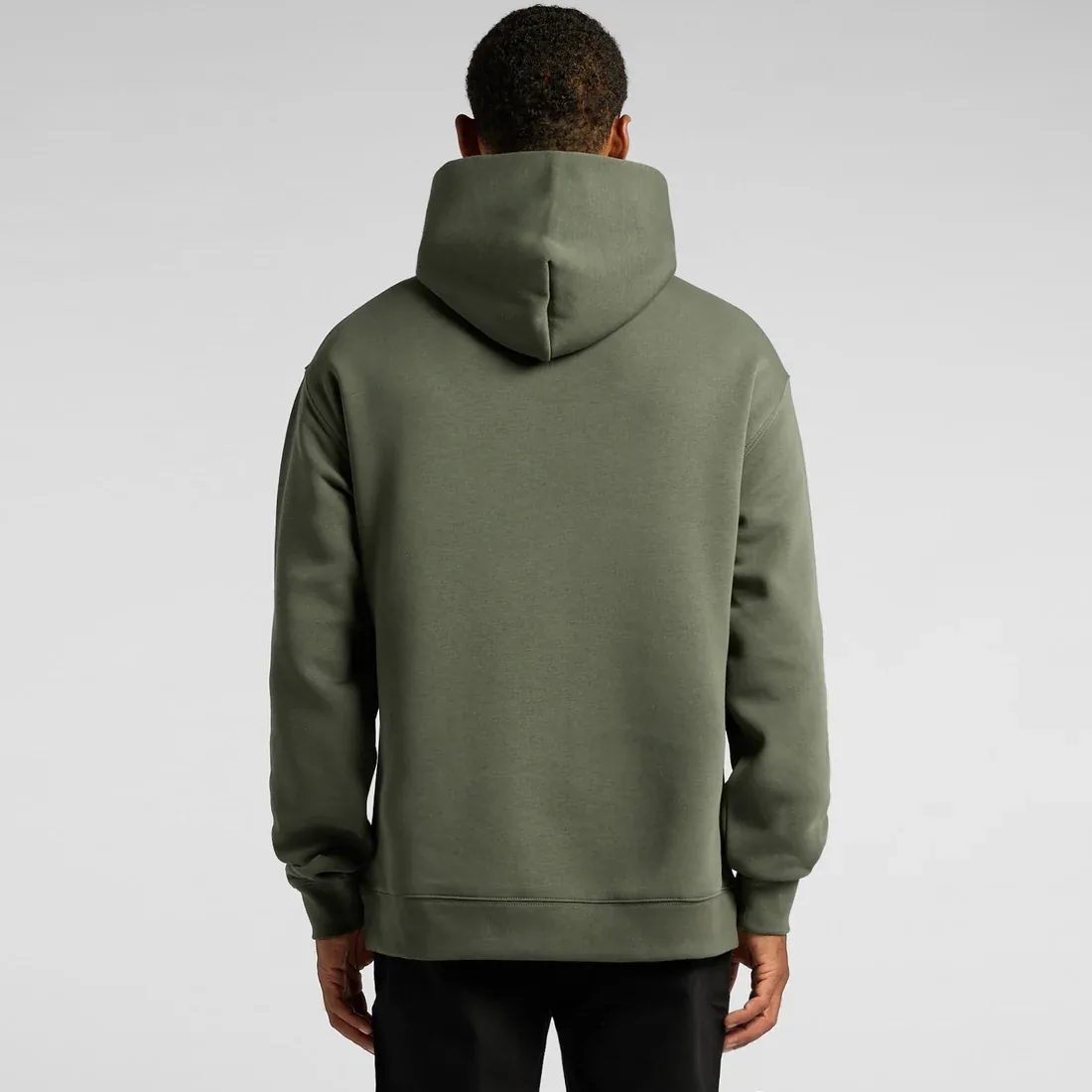
The left chest is the go-to and the safest, because it works on every style in this list and reads as a uniform rather than as merchandise. A logo printed across the upper back is the one people actually see from a distance, which is what you want if staff are on a site or serving customers across a room. Sleeve branding works with a second mark, an accreditation or a department name, and the hood itself is best left alone, since anything printed there is hidden whenever the hood is down.
If you are looking to make a hoodie feel like your own product rather than a blank with your logo on it, ask about replacing the neck label with your own. It is a small cost on top of the order and it is the detail people notice when they pull the hoodie on.
Before You Order for the Whole Team
- Check the size range covers everyone, including 3XL and 4XL if you need them.
- Order one sample in the size most of your team wears before committing to the full run.
- Pick a style that stays in stock, so you can top up later without the uniform changing.
- Decide early whether the neck label is being replaced with your own branding.
- Send vectored artwork where you can, since it saves time at the digitising stage.
- Think about what goes over the top in winter, so the hoodie works as a layer rather than a standalone.
Ordering Branded Work Hoodies
Custom work hoodies start at a minimum order of eight units embroidered, or twenty screen printed, decorated in house here in the UK. The standard turnaround is six to seven business days, and express delivery is available on request. You get a free visual proof within 30 minutes of placing the order, showing the logo at the size and position it will sit, so nothing is decorated before you have seen it. Mixed sizes across one order are fine and cost no extra.
Most of the printed and embroidered work hoodies we produce go to UK construction and trades teams, warehouse and logistics operations, facilities and maintenance companies, garages and workshops, groundstaff and landscaping crews, and hospitality venues kitting out back of house. If the hoodie is part of a wider uniform, our guide to the best workwear to customise covers what to put alongside it, our custom hoodies page has the wider range, and branded waterproof jackets covers the layer that goes over the top. Matching embroidered caps and beanies finish off a winter uniform.
Send us a headcount, a rough size split and your logo, and a dedicated Account Manager will come back within 15 minutes with a couple of options and pricing. If you are not sure which weight or style fits, tell us what the team does and where they work and we will narrow it down for you.
How to Order Work Hoodies
Four steps from first enquiry to delivered order, with one point of contact the whole way through.
Tell Us What You Need
Send over the style you have in mind, a headcount and size split, your artwork and your deadline. A dedicated Account Manager will come back to you within 15 minutes with pricing and options. Orders start at eight units.
Place Order
We send a free visual proof within 30 minutes of your order being confirmed, so you can be certain the logo is the size and in the position you want before anything is decorated.
Printed or Embroidered In House
Embroidered artwork is digitised into a stitch file and sewn out on a test piece first. Printed artwork is screen printed by our own team. Either way every hoodie is checked before it is folded and packed. Standard turnaround is six to seven business days, with express available on request.
Delivered To Your Door
Tracked delivery using the most reliable couriers in the UK, with shipping into Europe and worldwide whenever you need it.
Get a work hoodie quoteor call 0208 064 1315
Work Hoodie FAQs
What is the minimum order for branded work hoodies?
It is dependent on the technique. Embroidery, direct to garment and direct to film all start at eight units. Screen printing starts at twenty units because a screen has to be made for each colour in the design however small or large the run is. After that the more you buy the cheaper the unit price gets, because the setup work is the same whether it covers twenty hoodies or eight hundred. Ask your Account Manager about our price breaks for screen printing.
What weight of work hoodie should we order?
As a rough guide, 210 to 260gsm for indoor teams and warmer months, 280 to 330gsm as the year round default, and 350gsm and up for people outdoors in winter. If your team splits between indoor and outdoor work, two weights in the same colour with the same logo usually beats one compromise weight for everyone.
Is embroidery or printing better on a work hoodie?
Embroidery is recommended for anything that gets washed constantly, because stitches do not crack or fade and it reads as a uniform rather than merchandise. Screen printing suits jobs where you need an exact Pantone match, a large graphic or the lowest unit price on a big order. Plenty of teams have both, embroidered on the chest and printed on the back.
Can we add matching joggers to the order?
Yes. Build Your Brand, for example, pair the BY011 Heavy Hoodie with the BY014 Heavy Sweatpants in the same 300gsm cotton rich brushed fleece, so the top and bottom wear and wash alike and the colours stay matched. Each piece needs to meet the minimum for its technique on its own, and the artwork only needs digitising once to go on both.
Can you add staff names or job titles to staff hoodies?
Yes. A name or job title usually sits under the chest logo or on the sleeve, either embroidered or as a DTF transfer, which suits names and small runs. Send the list of names against sizes with your order and each one is matched to the right hoodie before it is decorated.
Where should the logo go on a work hoodie?
Left chest is the most popular position and works on every style. A print across the upper back is the one people see from a distance, which matters on a site or across a room when the name of the company needs to be seen. A sleeve suits a second logo or a department name. Avoid the hood, since anything there is hidden whenever the hood is down.
How long does a team hoodie order take?
Six to seven business days as standard, with express delivery available on request. Sending print ready artwork over early is the best way to keep an order on schedule, because digitising or screen setup happens before anything is decorated.
Can we order more later without the uniform changing?
That is the exact reason why it is worth picking a style that stays in stock. We keep your setup and your artwork on file, so a top up order for new starters comes back matching the first run rather than close to it.
Ready to kit your team out in work hoodies?
hello@1worldprint.co.uk · 0208 064 1315
Locations
20-22 Wenlock Road
London
N1 7GU
0208 064 1315
Visits by appointment onlyManchester Address
First Floor, Swan Buildings
20 Swan Street
Manchester
M4 5JW
0161 457 6080
Visits by appointment only