
How to Keep T-Shirt Printing Costs as Low as Possible: 12 Tips From a UK Printer
Published
Custom t-shirt printing does not have to be expensive. The price of your order comes down to just a handful of decisions, from the printing method and the number of colours to the blank t-shirt you choose. Here are 12 ways to keep your t-shirt printing costs low without cutting any corners on quality.
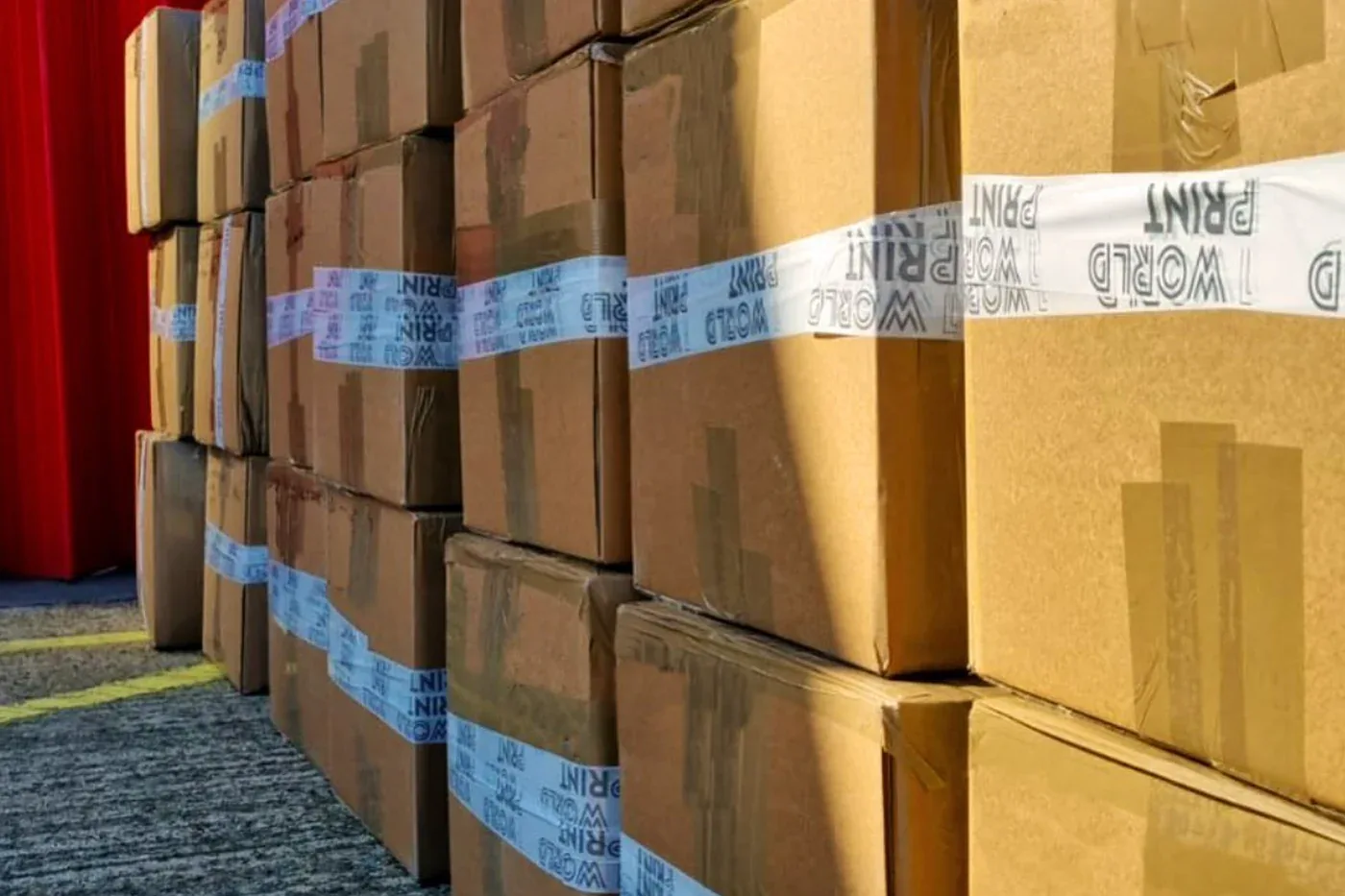
Staff t-shirts, event t-shirts, band merch and stock for a clothing brand all come down to the same question: how do you get the best result for the budget you have in mind? We have been printing custom t-shirts for businesses, brands, charities and events across the UK for years, and the same few choices make the biggest difference to the price every single time. Get them right and the cost per shirt drops fast, without compromising the shirt or the print.
Key points
- Screen printing usually gives the lowest price per shirt on larger runs, while direct to garment and direct to film suit small runs and full colour designs.
- Fewer print colours and fewer print positions mean less set up and a lower cost.
- Printing everything in one run spreads the set up cost across more shirts.
- White and light coloured t-shirts usually cost less to buy and print than black or dark t-shirts.
- Screen printing is recommended from 20 units per design, and direct to garment, direct to film and embroidery start at 8 units.
- A free visual proof within 30 minutes, and pricing from your Account Manager within 15 minutes.
In this guide
- How much does t-shirt printing cost in the UK?
- 12 ways to lower the cost of printed t-shirts
- 1. Choose the Right Printing Method for Your Quantity
- 2. Order Everything in One Run
- 3. Keep the Number of Print Colours Down
- 4. Limit the Number of Print Positions
- 5. Pick the Right Blank T-Shirt for the Job
- 6. Choose White or Light Coloured T-Shirts
- 7. Keep One Design Across the Order
- 8. Stick to Standard Sizes Where You Can
- 9. Send Print Ready Artwork
- 10. Check Your Visual Proof Carefully
- 11. Plan Ahead and Avoid Rush Orders
- 12. Use One Printer for Everything
- Screen printing vs DTG vs DTF vs embroidery: which is best value?
- Why the cheapest quote is not always the lowest cost
- Bulk t-shirt printing for events, teams and brands
- What customers say about our t-shirt printing
- How to get an accurate t-shirt printing quote
- T-Shirt Printing Cost FAQs
How Much Does T-Shirt Printing Cost in the UK?
There is no single price for t-shirt printing, because every order is different with many different variables. The cost of your custom t-shirts depends on five things:
- The blank t-shirt. Value brands, premium brands and organic cotton t-shirts are all priced differently, and our clothing catalogue has thousands of options.
- The quantity. The more you order in one run, the lower the price per shirt.
- The number of print colours. In screen printing, every colour needs its own screen, which incurs a cost.
- The number of print positions. Front, back, sleeve and neck prints are each set up and printed separately.
- The printing method. Screen printing, direct to garment printing, direct to film and embroidery each suit different quantities and designs.
The quantity and the set up work together. A two colour screen print on a dark t-shirt needs three screens (including the white underbase) whether you order 20 shirts or 200, so on the larger order each shirt carries a tenth of the set up cost. That is why the price per shirt falls so quickly in the first few hundred, and why small changes, such as losing a colour or a print position, matter most on short runs.
Tell us about your order and your dedicated Account Manager will come back to you within 15 minutes with pricing, and point out anywhere you could save.
Get a t-shirt printing quoteor call 0208 064 1315
12 Ways to Lower the Cost of Printed T-Shirts
1. Choose the Right Printing Method for Your Quantity
After the garment itself, the printing method has the biggest effect on the price of a t-shirt. Screen printing uses a separate screen for every colour, so there is a set up for each screen, but once the screens are made every extra shirt is quick to print. That makes screen printing the best value for larger runs. Direct to garment printing and direct to film need no screens, so they usually work out better for small runs and full colour designs.
Screen printing is recommended from 20 units per design, and direct to garment, direct to film and embroidery start at 8 units. Not sure which suits your design? Our guide to DTF vs DTG printing explains the difference, and your Account Manager will always recommend the most cost effective option.
2. Order Everything in One Run
Because the set up for screen printing is the same whether you print 20 shirts or 2,000, the price per shirt falls as the quantity rises. If you can combine orders across departments, events or future stock and print them in one run, you pay for the set up once rather than several times.
This is why bulk t-shirt printing for events, teams and brands gives the best value per shirt.
3. Keep the Number of Print Colours Down
Every colour in a screen printed design needs its own screen, so a one or two colour logo costs less to set up than a full colour design. A strong, simple design often looks just as good. You can also use the colour of the t-shirt as one of the colours in your design, which gives you an extra colour without an extra screen. Our guide to colour in screen printing explains how colours are counted.
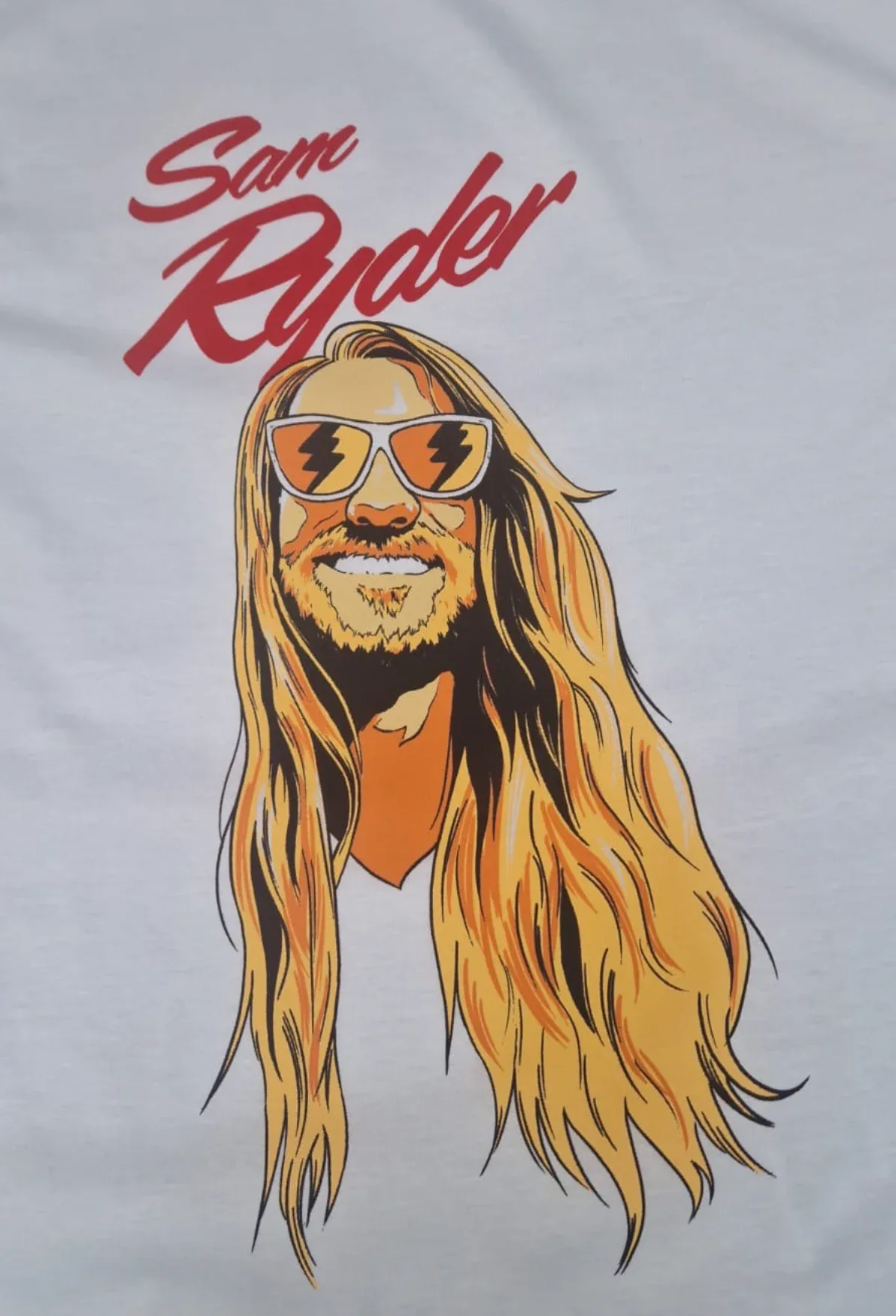
Sometimes more colours are worth it and enhance the design. The Sam Ryder t-shirt below is a 5 colour screen print, and every colour earns its place. If your design needs lots of colours on a small run, direct to garment or direct to film may be the better value choice.
4. Limit the Number of Print Positions
A front print, a back print and a sleeve print are each set up and printed separately, so every extra position adds to the cost. If your budget is tight, one strong front or back print usually does more than several small ones. Often the artwork is more important than an extra printing position. A small left chest logo with a larger back print is a popular way to get two positions working hard.
5. Pick the Right Blank T-Shirt for the Job
The blank t-shirt is going to be the biggest single cost in the order. Premium brands cost more than value brands, and the difference will add up across a large run. For event giveaways and one day use staff t-shirts, a reliable value brand such as Gildan or Fruit of the Loom does the job well. For merchandise you are selling, or clothing your team will wear every day, a better blank such as AS Colour, Stanley/Stella or Earth Positive organic cotton is worth the extra.
The weight of the garment is worth checking too. A heavier, premium cotton tee costs more to buy but holds its shape after washing, which matters for anything sold or worn every week. Don't buy cheap and buy twice. Our guide to the clothing brands worth personalising compares the main options, or browse the full clothing catalogue.
6. Choose White or Light Coloured T-Shirts
White t-shirts usually cost less to buy than coloured t-shirts, and they are simpler to print. On a black or dark t-shirt, a screen print more often than not needs a white underbase printed first so the colours stay bright, which adds a screen. Direct to garment printing on a dark t-shirt needs a pre-treatment, which helps the ink bond to the fabric, and a layer of white ink under the design. On a white t-shirt, none of that is required.
If your design works on white or a light colour, it is one of the easiest ways to lower the cost of printed t-shirts. If your brand needs black, that is fine too: we will simply make sure the design and method are set up to keep the cost down. Your experienced Account Manager will go through this with you when they see the artwork.
7. Keep One Design Across the Order
Every different design needs its own set up. Printing the same design on every t-shirt, rather than a different design for each team or department, keeps set up to a minimum. If you do need names or numbers, ask us about the most efficient way to add them.
8. Stick to Standard Sizes Where You Can
Extended sizes, such as 3XL and above, often cost more per garment than standard sizes. You should always order the sizes your people need, but getting accurate sizes before you order avoids paying for extra shirts that nobody can wear.
9. Send Print Ready Artwork
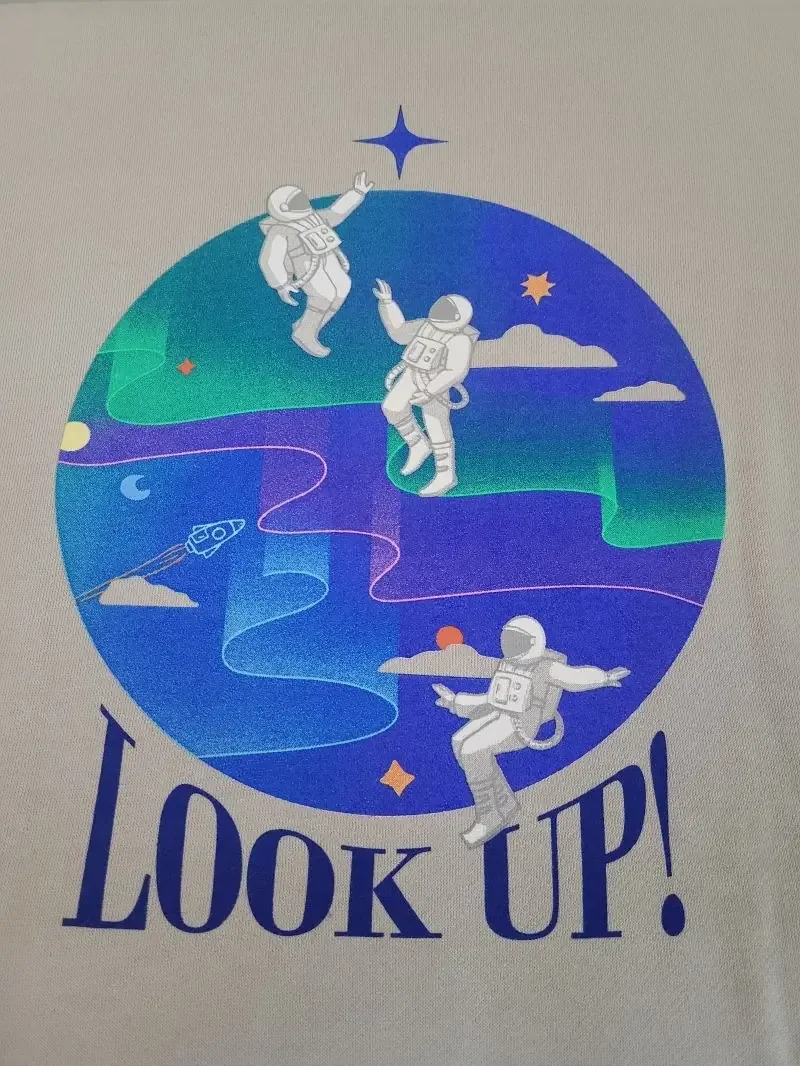
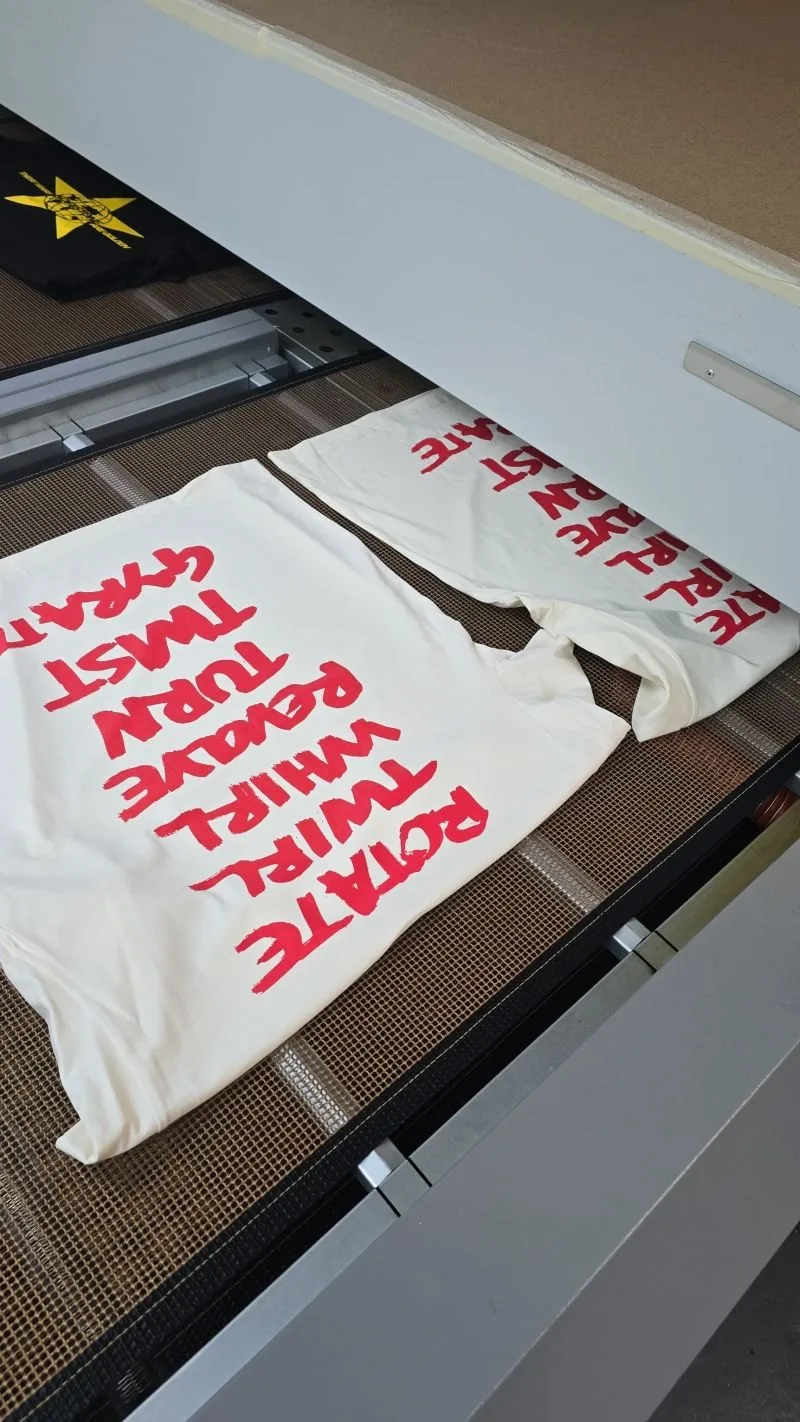
Vectored artwork, such as an AI, EPS or PDF file, is ready to separate into screens, which saves time on your order. If you only have a low resolution image, we offer in house artwork redraws and artwork edits, and for detailed multi-colour screen prints we handle the colour separations for you. The Look Up! hoodie below is a 10 colour screen print, and we created the colour separations for our client.
10. Check Your Visual Proof Carefully
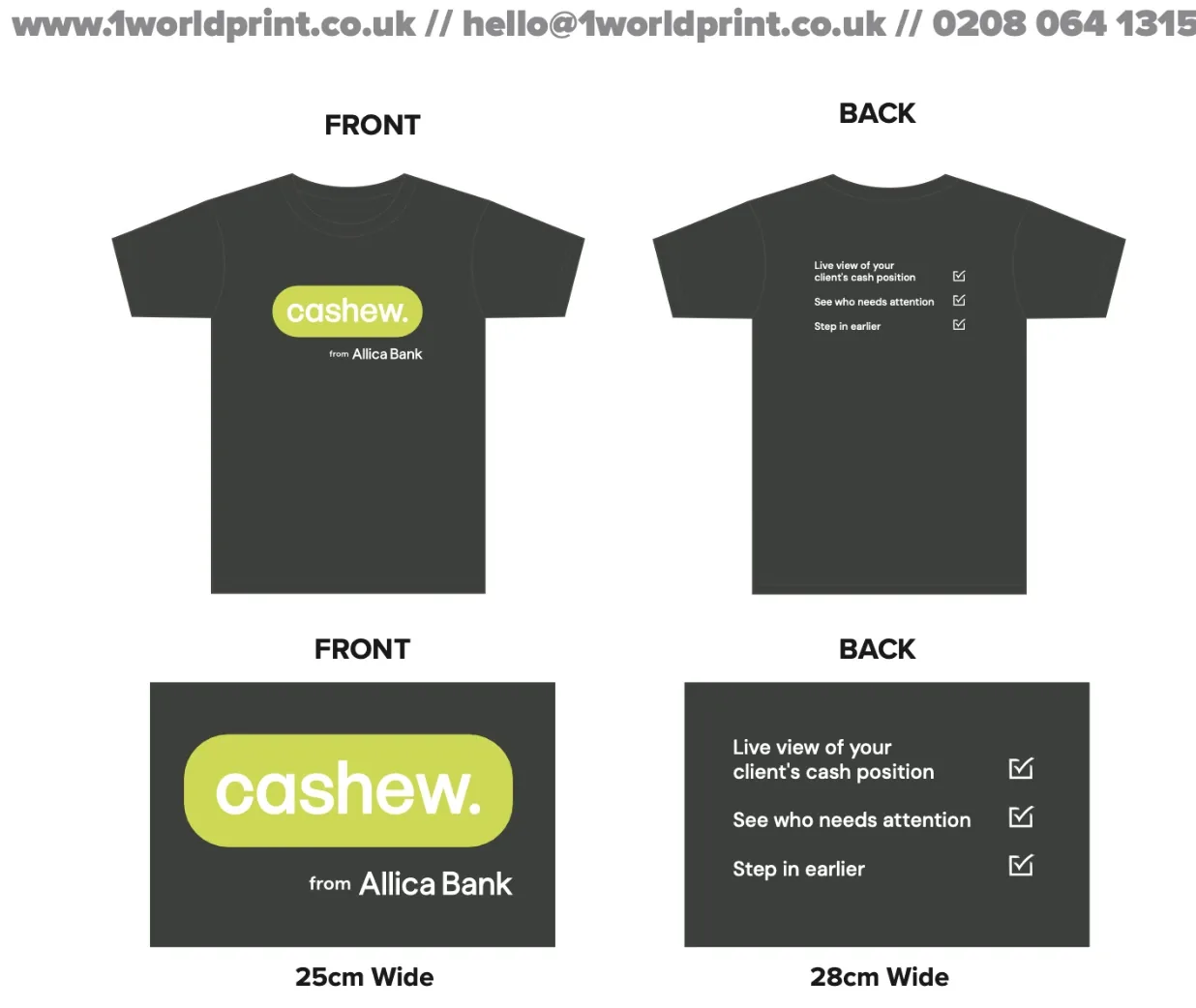
A mistake that makes it to print is the most expensive mistake of all. Every order includes a free visual proof within 30 minutes, showing the garment, colours, sizes, print sizes and positions. Check it carefully, ask for any changes, and nothing goes into production until you are happy.
It is vital the visual is checked and checked again.
11. Plan Ahead and Avoid Rush Orders
Rush orders usually cost more. Our standard turnaround is six to seven business days from artwork approval, and ordering with that time in hand lets us schedule your job efficiently. Express turnaround is available on request when you really need it, but planning ahead keeps your costs down and leaves time to check the proof properly.
12. Use One Printer for Everything
Ordering your t-shirts, hoodies, tote bags and promotional merchandise from one place means one Account Manager, one set of artwork and one delivery. Businesses can also apply for 30/60 day credit terms, so you can register as a client and order when you need to.
Screen Printing vs DTG vs DTF vs Embroidery: Which Is Best Value?
Each printing method has a sweet spot. Choosing the right one for your quantity and design is the easiest way to get the best value.
| Method | Best value for | Minimum | What affects the price |
|---|---|---|---|
| Screen printing | Larger runs, bold designs and exact Pantone colours | 20 units per design | Number of colours, print positions and quantity |
| Direct to garment | Small runs, full colour and photographic designs on cotton | 8 units | Print size and garment colour |
| Direct to film | Small runs and full colour designs on a wide range of fabrics | 8 units | Print size and number of positions |
| Embroidery | Logos on polos, hoodies, caps and workwear | 8 units | Logo size and detail, and number of positions |
For big, bold designs on larger runs, jumbo screen printing covers the whole front or back of a t-shirt, and special effects such as puff printing and metallic printing are available too. Special effects add cost, so they are best kept for merch you are selling rather than giveaways.
Why the Cheapest Quote Is Not Always the Lowest Cost
It is tempting to go with the lowest quote, but the cheapest t-shirt printing can turn out to be the most expensive. A misprint, a t-shirt that shrinks or twists after one wash, a print that cracks, or an order that arrives after your event all cost far more than you saved.
Look for a printer that sends a visual proof before printing, uses quality blank t-shirts, answers your questions quickly and has genuine reviews. Our guide to finding the best printing company in the UK explains exactly what to check, and our wash care guide helps your printed t-shirts last.
Bulk T-Shirt Printing for Events, Teams and Brands
The bigger the order, the more these tips save. We print bulk t-shirts for:
- Events and races. Bulk event t-shirts for marathons, 10Ks, festivals and sports events.
- Staff and teams. Branded workwear, work hoodies and uniforms for hospitality.
- Bands and brands. Band merch and stock for clothing brands, with t-shirt relabelling and garment finishing.
- Charities and schools. Fundraising t-shirts for charities and t-shirts for schools, colleges and universities.
What Customers Say About Our T-Shirt Printing
A few of the reviews customers have left for us on Trustpilot.
We ordered 25 t-shirts in a range of different sizes, printed with high-resolution photos with text on the back. All were great quality and fit perfectly. Price was very reasonable, would 100% use them again.
Quick response, fast turn around and great quality. Will come back for future runs!
How to Get an Accurate T-Shirt Printing Quote
The more information you give us, the more accurate your quote and the more savings we can find. When you get in touch, tell us:
- Your design, ideally as vectored artwork.
- The quantity. Sizes can be provided later.
- The t-shirt or brand you have in mind, or what the t-shirts are for so we can suggest one.
- Where the prints go: front, back, sleeve or neck.
- Your deadline and delivery address.
Your dedicated Account Manager will come back to you within 15 minutes with pricing, and you get a free visual proof within 30 minutes of your order being confirmed. You can get a quote using the button below, email hello@1worldprint.co.uk or call us on 0208 064 1315.
We print and finish every order in the UK and deliver nationwide with tracked UK couriers, with shipping into Europe and worldwide when you need it. Businesses can apply for 30/60 day credit terms by registering as a client.
T-Shirt Printing Cost FAQs
How much does t-shirt printing cost in the UK?
It depends on the t-shirt you choose, the quantity, the number of print colours and positions, and the printing method. The blank and the quantity usually move the price most. Tell us about your order and your dedicated Account Manager will come back to you within 15 minutes with pricing.
What is the cheapest way to print t-shirts?
For larger orders with a simple design, screen printing usually gives the lowest price per shirt, because the screen set up is spread across the whole run. For small runs or full colour and photographic designs, direct to garment or direct to film printing is usually better value, because there are no screens to make.
Does ordering more t-shirts lower the price?
Yes. The set up for a screen print is the same whatever the quantity, so the more t-shirts you print in one run, the lower the price per shirt.
Does printing on dark t-shirts cost more?
It can. A screen print on a dark t-shirt usually needs a white underbase so the colours stay bright, which adds a screen, and direct to garment printing on dark garments needs a pre-treatment and white ink. Dark t-shirts also usually cost a little more to buy, so white and light colours are normally the cheaper option.
How can I reduce the cost of a multi-colour design?
Reduce the number of colours, use the colour of the t-shirt as one of the colours in the design, or choose direct to garment or direct to film printing for small runs of full colour designs.
What is the minimum order for t-shirt printing?
Screen printing is recommended from 20 units per design, and direct to garment, direct to film and embroidery start at 8 units.
Do rush orders cost more?
Usually, yes. Our standard turnaround is six to seven business days from artwork approval, and express turnaround is available on request.
Can you help with my artwork?
Yes. We offer artwork redraws and artwork edits, and for detailed multi-colour screen prints we handle the colour separations for you.
Ready to get a price on your t-shirts?
hello@1worldprint.co.uk · 0208 064 1315
Locations
20-22 Wenlock Road
London
N1 7GU
0208 064 1315
Visits by appointment onlyManchester Address
First Floor, Swan Buildings
20 Swan Street
Manchester
M4 5JW
0161 457 6080
Visits by appointment only