
Custom Tote Bags Worth Putting Your Name On

Published
Custom tote bags are one of the few pieces of branded merchandise that people genuinely use, week after week, in public. That makes the choice of bag worth more thought than it often gets.
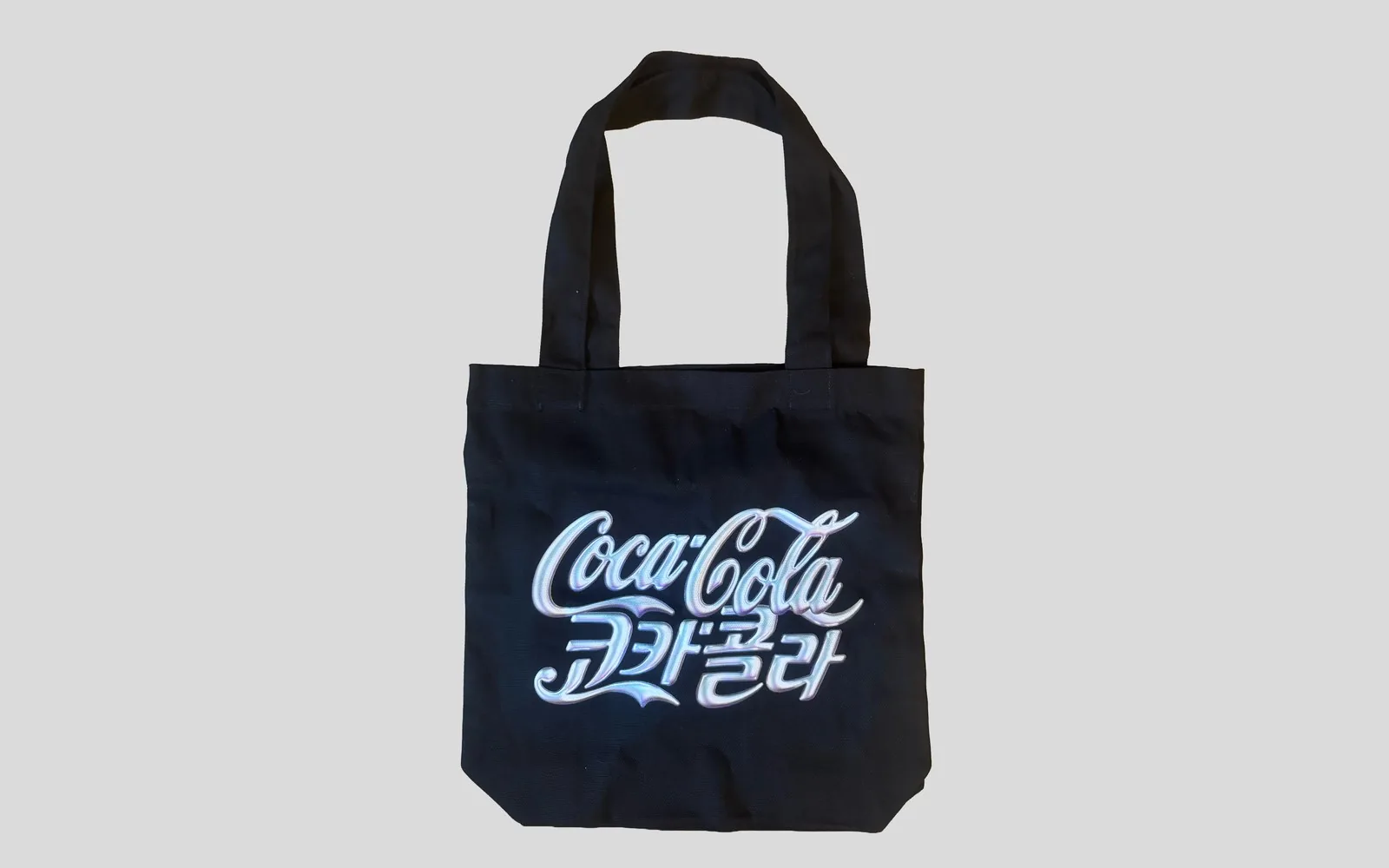
Walk round any exhibition hall and you are sure to leave with at least one tote bag. The difference between a tote bag that gets used for years and one that gets binned before the journey home comes down to the blank you pick, the print technique and how well the artwork is set up.
The minimum order for printed tote bags is just ten units with DTG or DTF printing, or 20 with screen printing, with a standard turnaround of six to seven business days and an express service on request. That low minimum is what makes branded tote bags work for a single event or a small retail run, rather than only for companies ordering in huge numbers.
Key points
- The minimum order for printed tote bags is just 10 units with DTG or DTF printing, or 20 with screen printing, with a standard turnaround of six to seven business days.
- Around 270 to 340gsm is the sensible middle ground for cotton bags, and 400gsm and above is canvas, worth it when the bag is being sold on rather than used as giveaways.
- Screen printing is the best option for solid colours and exact Pantone matches, and direct to garment printing gives best results with full colour photos on natural and white cotton.
- Organic cotton and jute tote bags are available when sustainability is part of your message.
In this guide
- Start With the Fabric Weight
- What Are You Using Them For?
- Types of Custom Tote Bags Worth Considering
- Handles Matter More Than You Think
- Which Print Method for Tote Bags?
- Getting the Artwork Right
- How to Order Custom Tote Bags
- Giveaway or Product? Decide Before You Order
- Custom Tote Bag FAQs
Start With the Fabric Weight
Cotton bag weight is measured in grams per square metre, and it is the single best indicator of how long the bag survives.
- Around 140 to 170gsm. Lightweight and cost effective. Fine for a one-day event where the bag is carrying a brochure, but it will not take a heavy supermarket trip.
- Around 270 to 340gsm. The sensible middle ground. Strong enough for a decent size shopping trip and books, and still affordable in volume. Most orders are around this weight.
- 400gsm and above. Canvas territory. Structured, hard-wearing and genuinely premium. Worth it if the bag is being sold rather than given away.
It is often tempting to go for the cheapest option, but a bag that rips the first time someone puts a few tins in it leaves your logo on a broken bag, never to be seen again. If the budget is fixed, ordering slightly fewer bags at a sensible weight usually does more for the brand than ordering more at the lightest.
What Are You Using Them For?
The job the bag has to do should decide the blank, not the other way round. Five briefs come up again and again.
Exhibitions and Events
The bag carries a few brochures, flyers and pens for one (long) day, then goes home. A lightweight cotton bag is enough, and the budget is better spent on quantity so you do not run out on the second day. Order these as promotional giveaway bags rather than as a product.
Retail and Merchandise
Here the bag is the product and somebody is paying for it. Canvas, reinforced handles, a gusset and a design good enough to stand on its own without your logo doing all the work. This is where the extra cost per bag earns itself back.
Corporate Gifting and Onboarding
New starter packs, conference gifts and client welcome boxes. The bag needs to feel considered rather than disposable, because it is representing you in someone's home or office. A mid weight organic cotton bag hits the mark without looking over the top.
Schools, Clubs and Charities
Volume matters more than weight, and budgets are tight. Drawstring bags and lightweight cotton bags both work, and a single colour print keeps the unit cost down while still being clearly branded.
Ecommerce Packaging
A branded bag inside the parcel instead of another plastic mailer. It costs more than packaging but it is kept rather than recycled, which turns a delivery into advertising that keeps working long after it has been handed over or purchased.
Types of Custom Tote Bags Worth Considering
Standard Cotton Tote
The classic, and the bag most people picture when they hear tote. Long handles, flat construction and a big printable area on both sides, which makes it the ideal item for events and giveaways.
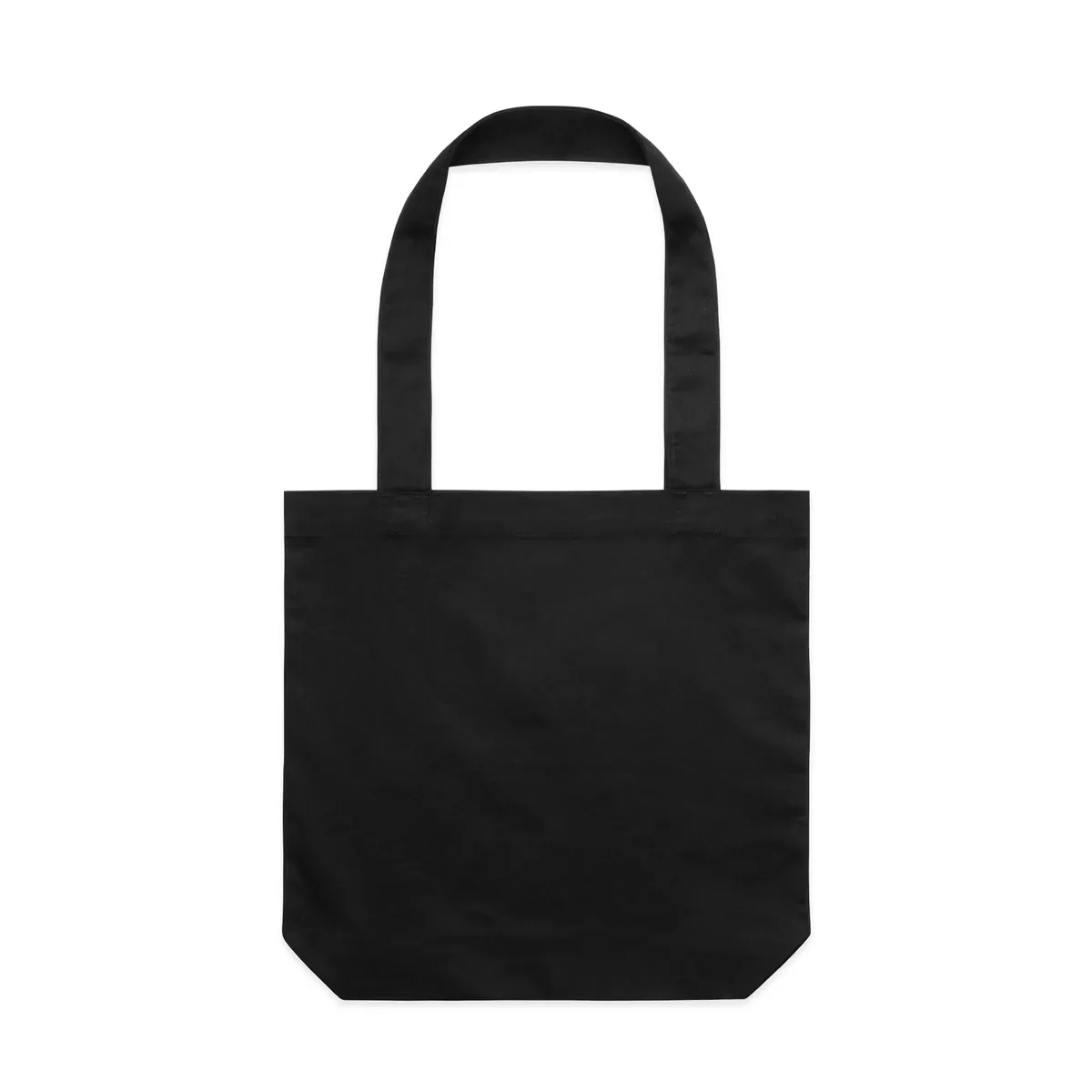
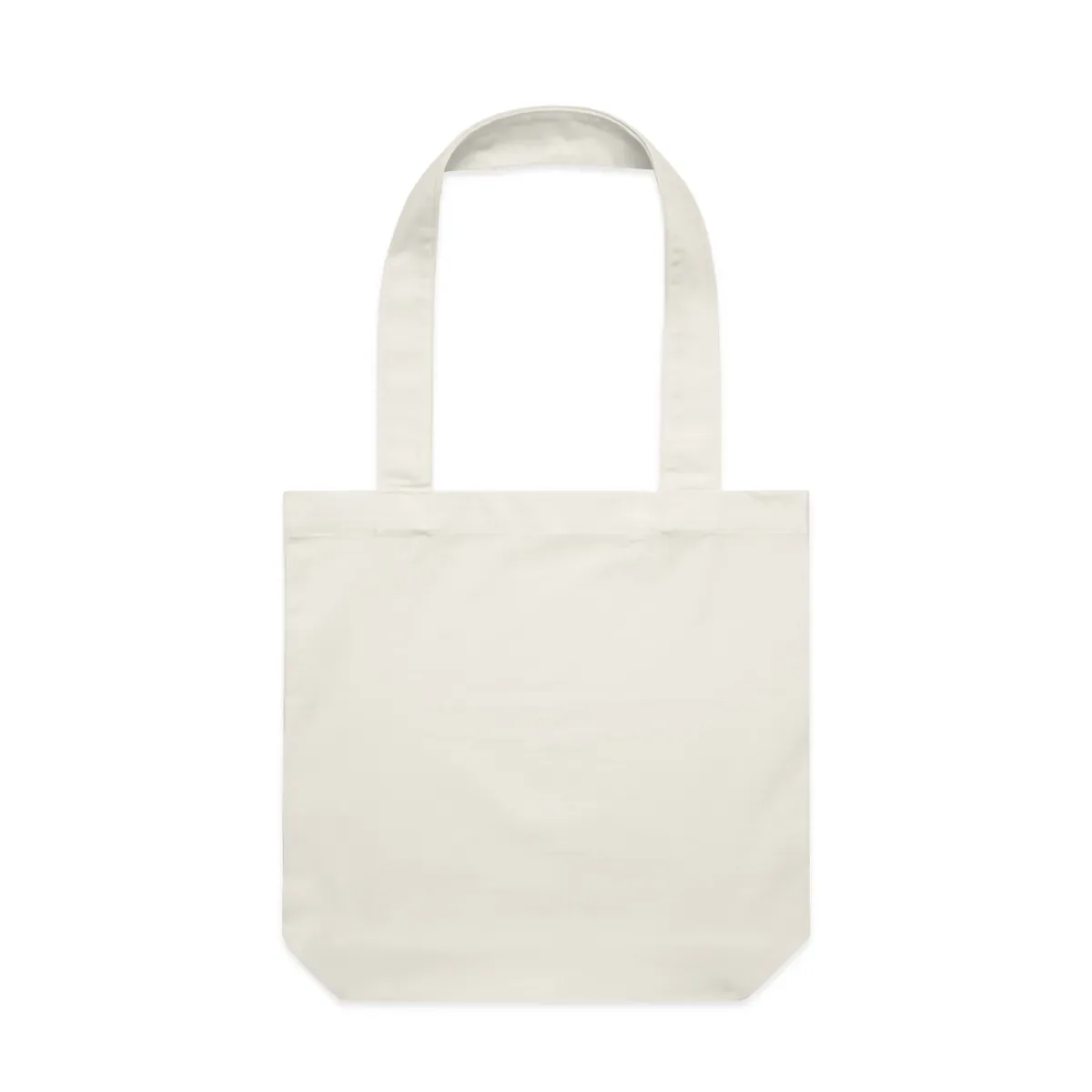
The bag at the very top of this page is the 1007 after one of our own jobs, printed for Strava with their logo in their exact Pantone colour across the front. The AS Colour Basic Tote is a 200gsm, 100% cotton bag, 42cm by 42cm with a 9.5cm gusset, which allows a wide, flat area for a bold single colour logo like this one. At 200gsm it sits between the light and mid weight bands above, a good all rounder for everyday use and events.
Organic Cotton Tote
Grown without synthetic pesticides, and the better bags carry GOTS certification, so the claim can be proven rather than simply taken on trust. If sustainability is part of your message, the bag is a good place to prove it.
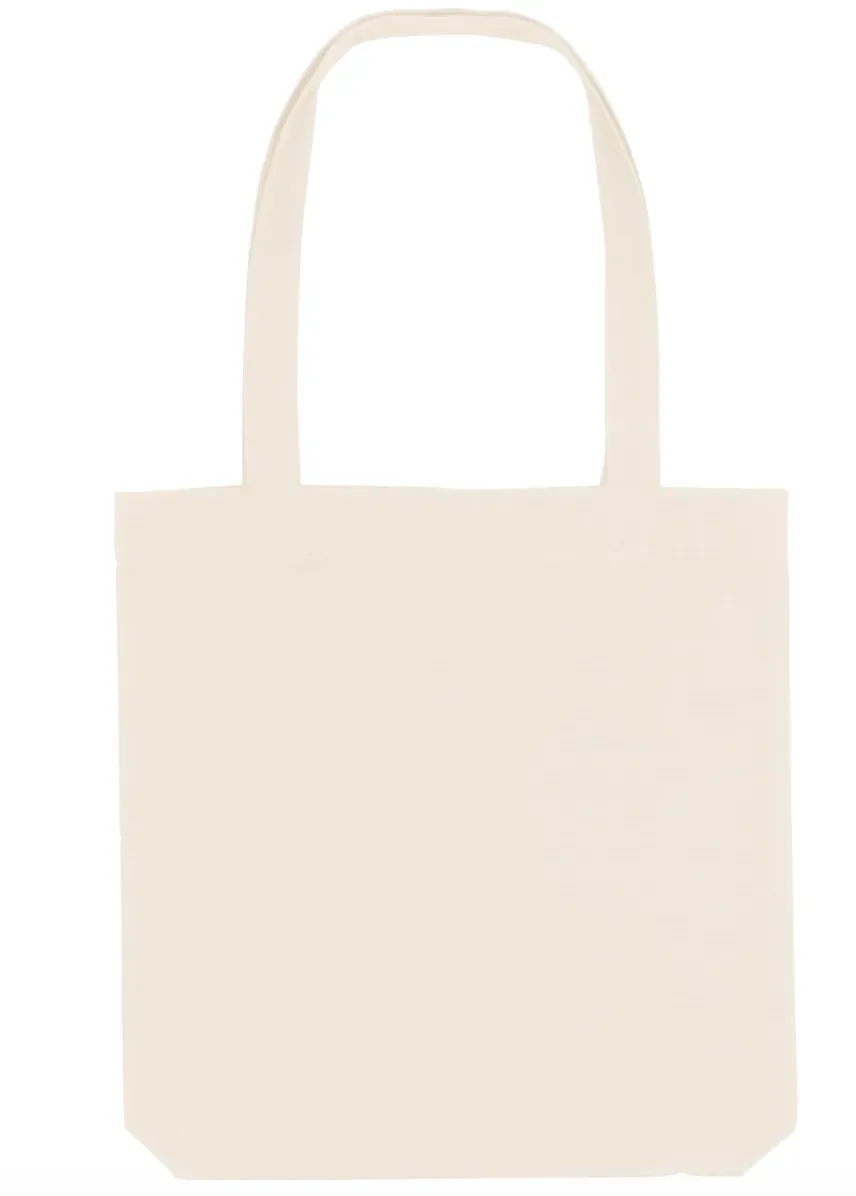
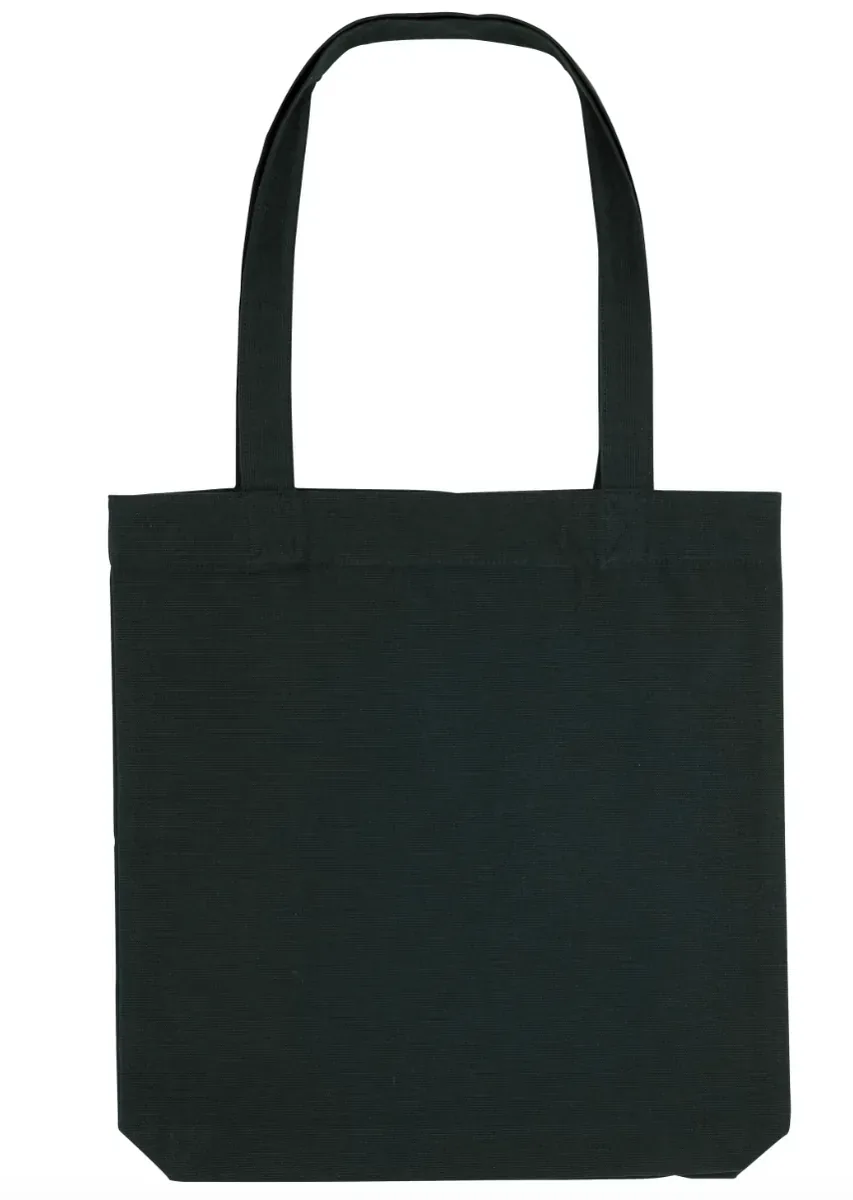
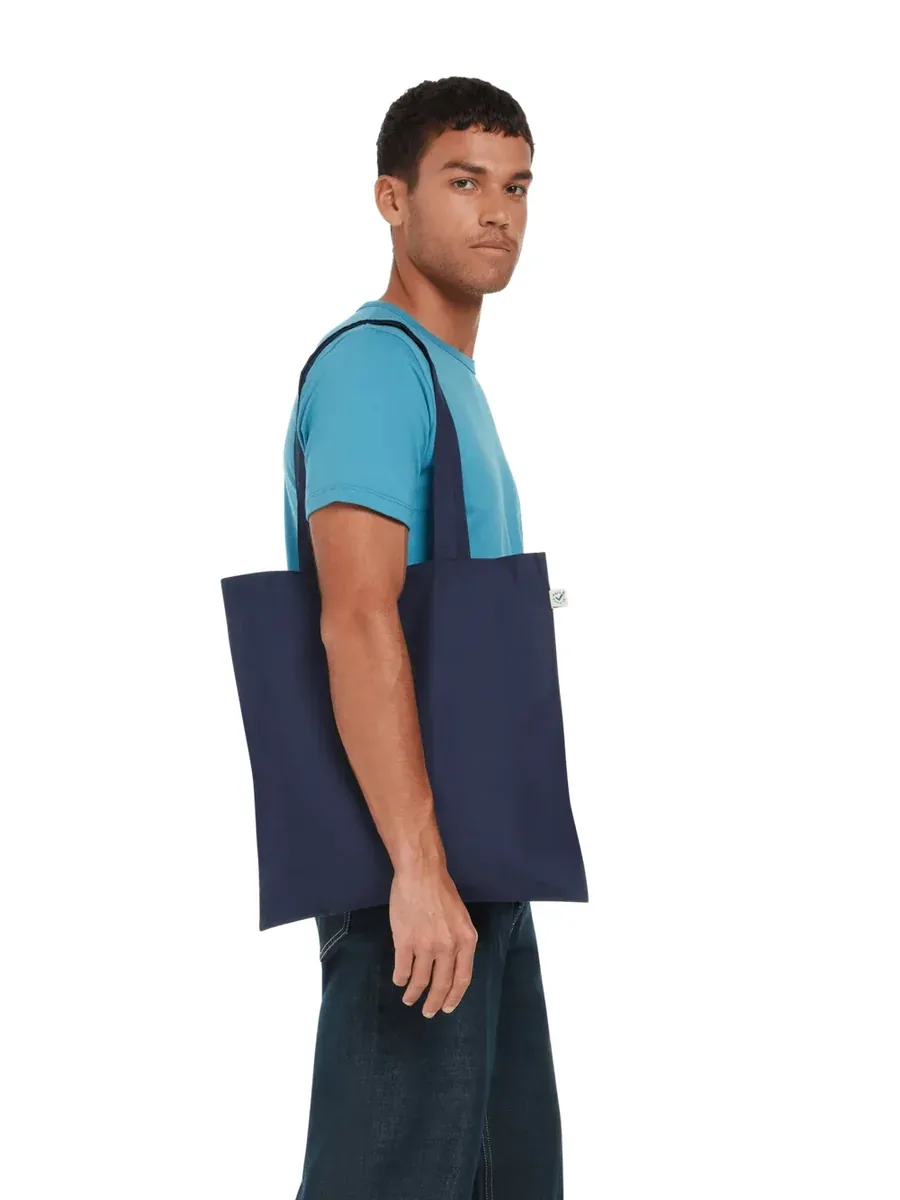
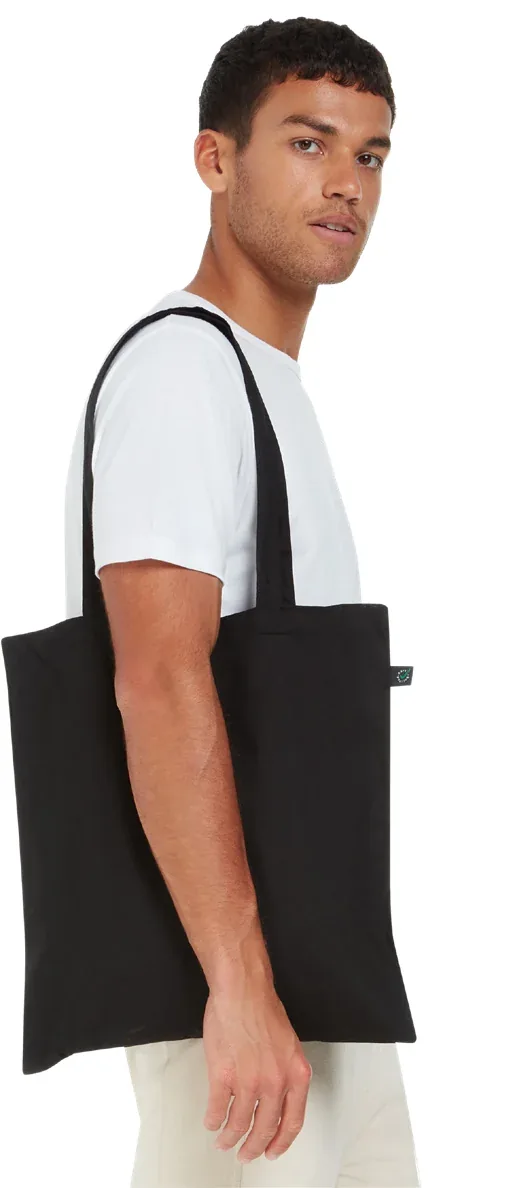
The EP70 Earth Positive Shopper Tote is the one we reach for most. It is 100% GOTS certified organic cotton, compact spun in a plain weave, and it comes in one size at 38cm wide by 42cm long. Four colours are available: black, white, undyed natural and French navy. It takes screen print, discharge screen printing, transfer, direct to garment and embroidery, so there is no print method it doesn't allow for.
At around 120g a bag it is a deliberately light option, which is what keeps it affordable in volume. If the bag has to carry a shop rather than a brochure, move up to a canvas shopper instead.
Canvas Shopper
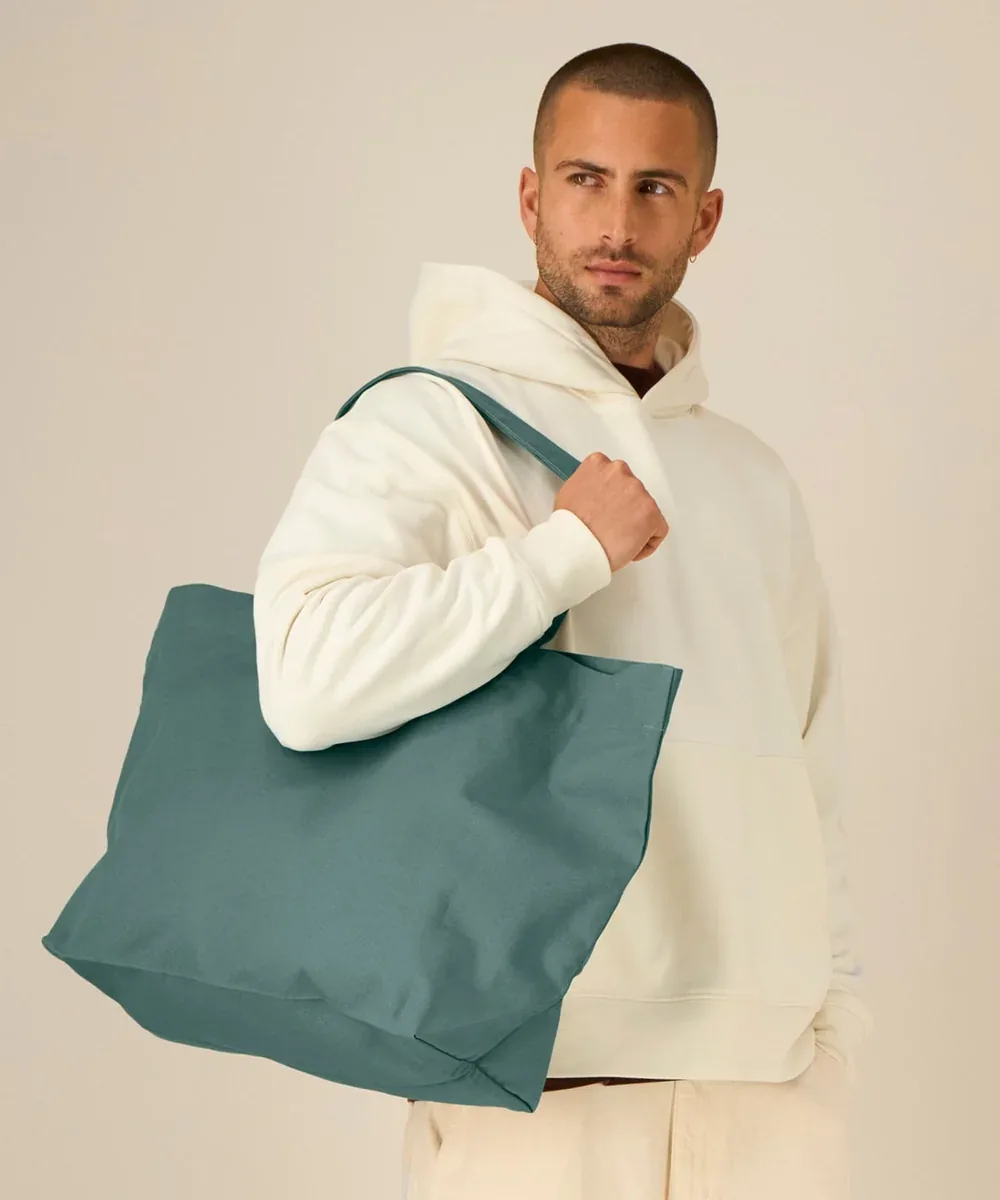
Heavier, often with a gusset so it holds shape and volume. This is the bag you will see in the back of cars and reused for years, and the one to choose when the tote is going to be sold rather than handed out.
Jute Bag
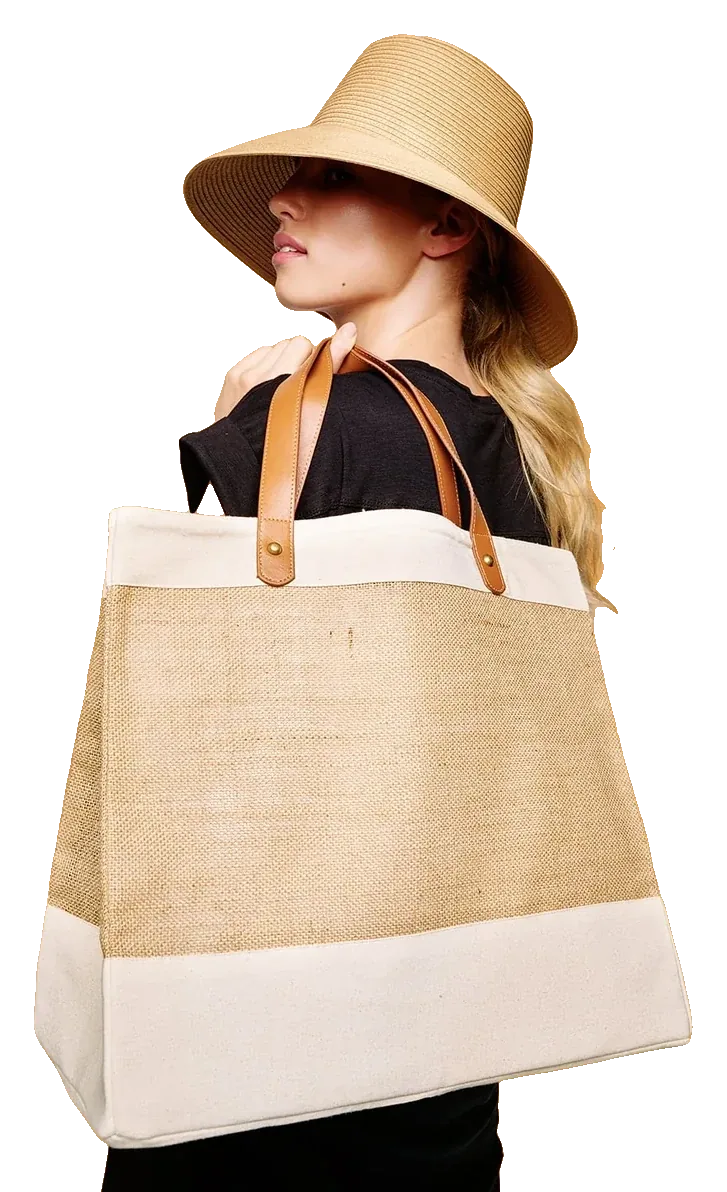
Natural fibre with a distinctive texture and a strong eco signal, which is why it turns up so often in sustainable merchandise ranges. Usually laminated inside for strength, and it stands out on a stand full of cotton totes.
Drawstring Bag
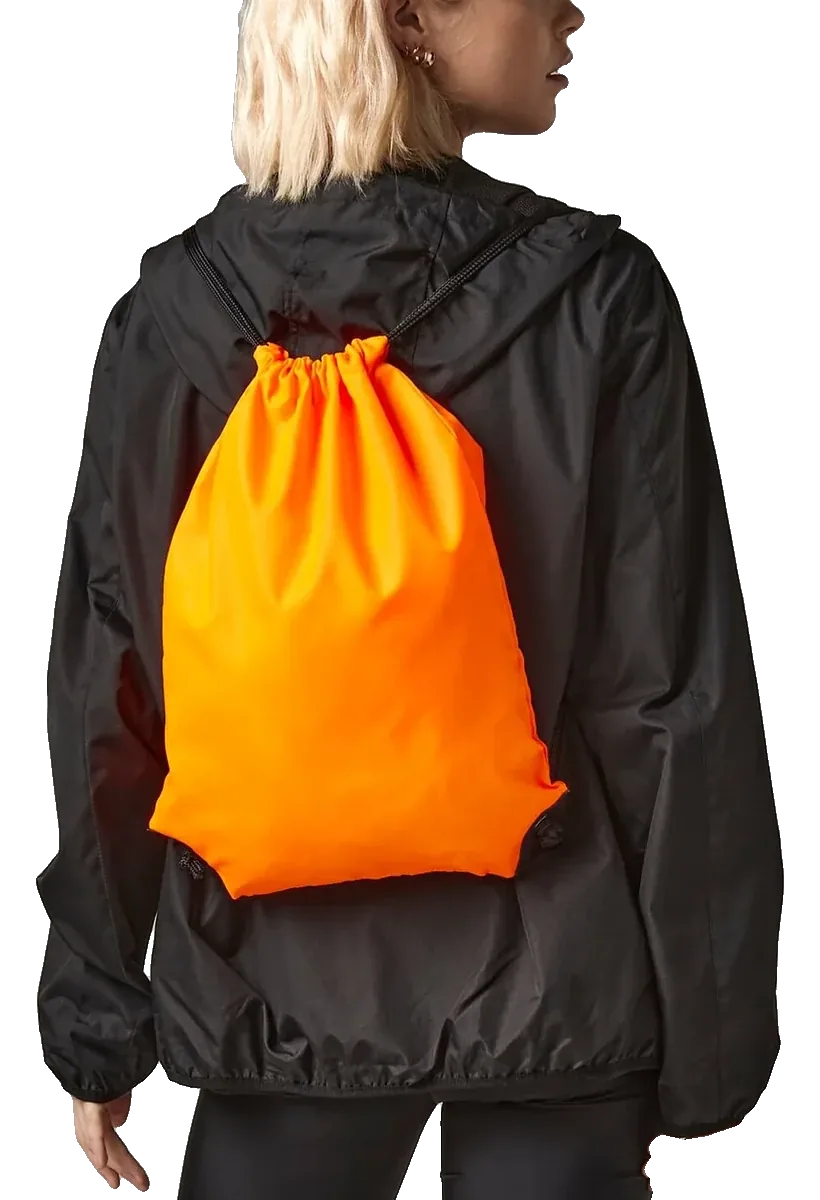
Technically not a tote, but it competes for the same promotional bags budget. Lighter, cheaper and better suited to sports clubs, schools, universities and free event goody bags.
Handles Matter More Than You Think
Long handles that go over the shoulder are what most people want from a shopper. Short handles are carried in the hand and suit smaller, smarter bags. Check the handles are stitched into the seam along their full length rather than just tacked at the top, because that join is where cheap bags come apart.
Which Print Method for Tote Bags?
Screen printing is the most popular technique for branded tote bags in cotton. It is durable, it gives an exact Pantone match and it gets cheaper per bag as the order grows. Screen printed tote bags start at just 20 units.
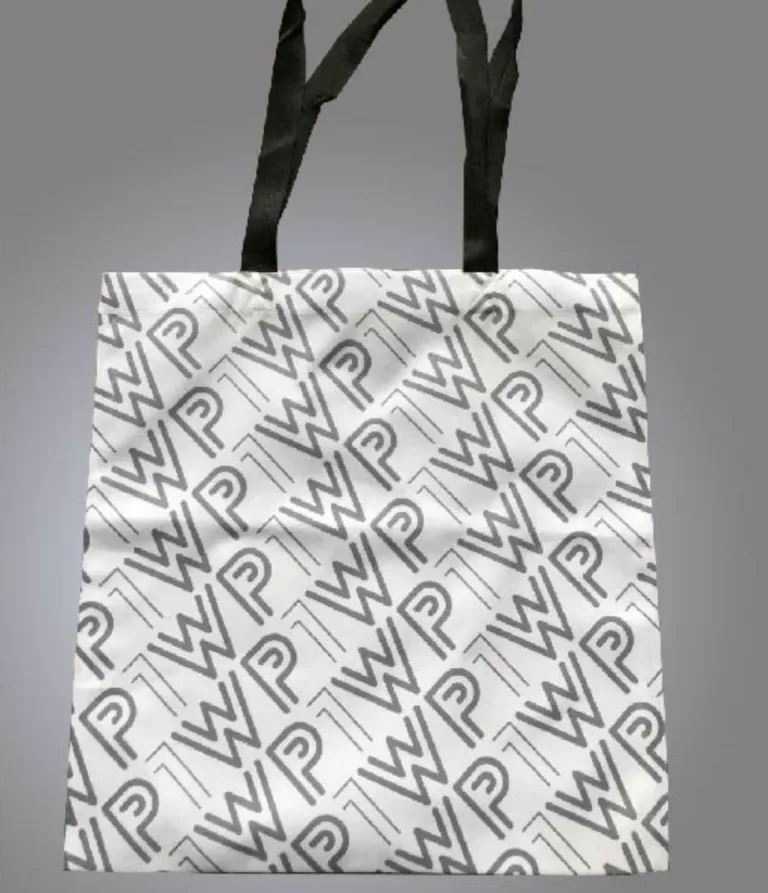
For full colour or photographic artwork, direct to garment printing works best on natural and white bags, and the ink sinks into the fabric and becomes part of the bag, for a soft, eco-friendly finish. If you want the design running right to the edges of the bag, all over printing covers the whole surface, seams included. It is a dye sublimation process, so it requires a polyester bag rather than cotton, and it is how we print edge to edge designs like the 1WorldPrint monogram bags we produced, shown below.
For short runs, and for bags with textured or synthetic fabrics that do not suit either screen print or DTG, DTF transfers are the practical option. As a rough rule: one or two solid colours in volume, screen print; a full colour design on a natural bag, DTG; a small run on an awkward fabric, DTF.
Getting the Artwork Right
Most delays on printed tote bags come from the artwork received rather than production delays. For screen printing, vector files are what we require, so an AI, EPS or PDF with the fonts outlined, along with your Pantone references if the colours have to match an existing brand palette. For full colour DTG work, artwork created at 300 DPI as a PNG with a transparent background is best. A logo pulled off a website will be too low resolution to print at bag size, and it is worth finding the original artwork before the order goes in rather than after. Your Account Manager will be happy to check artwork for you if required.
Think about the print area early. A standard cotton tote gives you a generous print area on both sides, but the handles, the seams and the base of the bag all eat into it. Designs that run right to the edge need all over printing rather than a standard placement, which is worth deciding before the artwork is drawn rather than trying to stretch a design afterwards.
Fewer colours means a lower unit cost on screen printed designs, because each colour is a separate screen. If the budget is tight, a bold one colour design on a coloured bag will usually look better than a cramped three or four colour one.
How to Order Custom Tote Bags
Four steps from first enquiry to delivered order, with one point of contact the whole way through.
Tell Us What You Need
Send over your choice of bag, quantity, artwork and deadline. A dedicated Account Manager will come back to you within 15 minutes with pricing and options.
Place Order
We send a free visual proof within 30 minutes of your order being confirmed, so you can be certain the design is exactly how you want the finished bags to look.
Printed In House
Your order is printed by our own production team, then checked piece by piece and packed ready to go.
Delivered To Your Door
Tracked delivery using the most reliable couriers in the UK, with shipping into Europe and worldwide whenever you need it.
Giveaway or Product? Decide Before You Order
Decide whether the custom tote bags you are ordering are a giveaway or a product you are looking to sell. A giveaway needs to be cheap enough to hand out in volume without a worry. A product needs to be good enough that someone would buy it without your logo on the side, and has to stand the test of time. The two briefs lead to very different bags. If you are also weighing up backpacks, sports bags or laptop bags, our branded bags range covers the full line up.
Get a custom tote bag quoteor call 0208 064 1315
Custom Tote Bag FAQs
How much do custom tote bags cost?
The price is worked out using the type of bag you wish to have, the number of print colours, whether you print just one side or both, and the quantity purchased. The price per bag falls steadily as the run grows. Send us the design and the quantity and you will have a quote back within 15 minutes.
What is the minimum order for custom tote bags?
Ten units with DTG or DTF printing, or 20 with screen printing. That is deliberately low, so a single event, a market stall or a small retail run is viable rather than just bulk orders. The price per bag comes down as the quantity rises, and the biggest price breaks happen in the first few hundred.
How long do branded tote bags take?
Six to seven business days as standard, with an express service on request. Artwork approval is the part that usually sets the pace, so getting a print ready file over early is the single best way to keep an order on schedule. We will get a visual approval over to you within 30 minutes of ordering.
What weight of cotton bag should I choose?
Around 140 to 170gsm is fine for a one day event where the bag carries a brochure. Around 270 to 340gsm is the sensible middle and where most orders should land. 400gsm and above is canvas, which is worth it when the bag is being sold rather than given away.
Can you print full colour photographs on a tote bag?
Yes. Direct to garment printing (DTG) handles full colour and photographic artwork on natural and white cotton bags, and the ink sinks into the fabric and becomes part of the bag, for a soft finish. Screen printing remains the better choice for solid colours and exact Pantone matching, especially as the quantity rises.
Can the design cover the whole bag?
Yes. All over printing covers the full surface including the seams, rather than sitting as a placed panel on the front. We use dye sublimation, so the bag is required to be polyester rather than cotton. It suits repeat patterns and designs with no natural edge, and it needs to be designed into the artwork from the start.
Are organic or recycled tote bags available?
Yes. We offer organic cotton, jute and recycled bags. Organic cotton is the usual choice when sustainability is an important part of the message, and jute has a distinctive texture that stands out on a stand full of cotton totes.
What artwork format do you need?
For screen printing, vectored artwork is ideal, so an AI, EPS or PDF with outlined fonts, plus any Pantone references. For full colour DTG prints, a 300 DPI PNG with a transparent background works best. If all you have is a logo in another format, send it over and we will tell you whether it will hold up at bag size, or suggest an alternative, such as the artwork redraw service we provide.
Ready to order your custom tote bags?
hello@1worldprint.co.uk · 0208 064 1315
Locations
20-22 Wenlock Road
London
N1 7GU
0208 064 1315
Visits by appointment onlyManchester Address
First Floor, Swan Buildings
20 Swan Street
Manchester
M4 5JW
0161 457 6080
Visits by appointment only